High-traffic hotel bathrooms face a unique triage of priorities: they must look premium for guests, survive heavy daily use, and be quick and safe to clean between stays. Good design balances three buckets: (1) material selection, (2) finish and detailing, and (3) operational maintenance strategies. Below are practical, evidence-backed choices and specification tips to get commercial durability without sacrificing style.
1. Pick the right base materials (the backbone)
Choose substrates proven for corrosion and wear resistance.
- Stainless steel (fixtures & hardware) — Use 316 for coastal or highly corrosive environments (more chloride resistance) and 304 for standard urban interiors. 316 has a measurable edge where longevity and resistance to pitting matter; 304 is fine for many interiors and is more cost-effective. MetalTek+1
- Engineered quartz (vanities) — Non-porous, stain resistant, and easy to clean; a top choice for high-use vanities where cosmetics and water exposure are constant. Quartz minimizes sealing and staining issues common to natural stone. Better Homes & Gardens
- Solid surface (integral sinks) — Seamless, repairable, and hygienic; good for mid-range applications where scratches can be buffed out and a monolithic look is desired.
- Porcelain glazed tile (walls & floors) — Durable and easy to disinfect; choose large formats and rectified edges to reduce grout lines. Use darker or epoxy grout where staining is a concern.
2. Invest in advanced finishes — they pay back
Surface finish technology dramatically affects scratch/tarnish resistance and maintenance.
- PVD (Physical Vapor Deposition) finishes — PVD provides a hard, wear-resistant colored finish (matte black, brushed gold, bronze) that resists scratching and tarnishing far better than conventional plating. For hotel faucets and hardware where look + longevity are both required, PVD is becoming the industry standard. Market data shows rising adoption in commercial plumbing due to durability benefits. Grand View Research+1
- Brushed vs. mirror chrome — Brushed/brushed-nickel hides fingerprints and micro-scratches better than mirror chrome; choose brushed finishes in high-touch zones.
- Powder-coated steel for accessories — Well applied powder coat on structural steel (grab bars, signage) is more abrasion resistant than wet paint.
3. Detail for cleanability and reduced touch-points
Small details save big cleaning time.
- Integral sinks and sloped counters — Seamless undermount or integrated sinks reduce grime traps and make wipe-downs faster.
- Fewer seams & horizontal ledges — Design to eliminate horizontal surfaces that collect dust and moisture. Use coved junctions between wall and floor finishes.
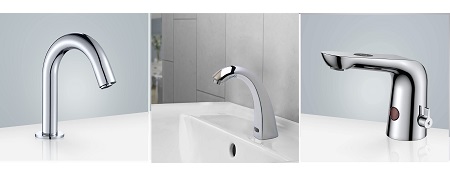
- Touchless activations — Sensor faucets, soap dispensers, and flush valves reduce touchpoints and recurrent cleaning. Choose commercial-grade sensor units rated for millions of cycles.
- Accessible trap/valve access — Make valves and service items accessible from a service panel so maintenance doesn’t require dismantling decor.
4. Hygiene strategy: materials + cleaning protocols
Materials are only as good as the cleaning regimen they support.
- Follow evidence-based cleaning intervals — High-touch surfaces (faucet handles, flush buttons, door handles) should be cleaned daily or more often as required. For general facility guidance, follow CDC cleaning and disinfecting recommendations for non-healthcare facilities. CDC
- Antimicrobial coatings: use carefully — Some coatings claim residual efficacy; the EPA has guidance and test methods for evaluating these products. They can supplement but never replace routine cleaning and disinfection. Specify products with validated EPA test results if you choose supplemental coatings. epa.gov+1
5. Operational specs that reduce lifecycle cost
A few spec items reduce long-term CAPEX/OPEX:
- Replaceable wearing parts — Choose faucets and shower valves with replaceable cartridges and service parts that can be swapped without full replacement.
- Robust cartridge/valve ratings — Specify valves tested for high cycles and water quality tolerance (scale, suspended solids). Self-closing metering valves are often superior for public restrooms.
- Standardize finishes and spare parts — Standardizing models across a property reduces spare inventory and speeds repairs.
6. Aesthetics without fragility
You can have style and durability:
- Use textured or honed finishes (matte PVD, brushed stainless) to hide marks.
- Employ contrast accents (brass or bronze PVD fittings) on durable base materials for a premium look without fragile surface treatments.
- Select color palettes whose natural wear patterns look intentional — e.g., warm metals that develop a subtle patina vs. ultra-high gloss surfaces that show micro-abrasions.
7. Cost vs. longevity: an ROI mindset
Higher initial spend on premium PVD finishes, 316 stainless, and engineered stone often reduces replacement and labor costs. When specifying, calculate lifecycle cost: expected guest nights × cleaning hours × probability of replacement. Market trends show PVD adoption rising because its abrasion and tarnish resistance lowers maintenance and replacement rates. Grand View Research
Illustrative (non-engineered) comparison table
(I was unable to produce a plotted graph right now — see note at top — so below is an illustrative table summarizing relative performance.)
| Material / Finish | Durability (1–10) | Maintenance Frequency (1=low) | Notes |
|---|---|---|---|
| 316 Stainless Steel (fixtures) | 9.0 | 2.0 | Best for corrosive environments. MetalTek |
| PVD-coated brass (finishes) | 8.5 | 2.5 | Excellent scratch/tarnish resistance; premium aesthetics. Grand View Research |
| Engineered Quartz (vanities) | 8.0 | 2.0 | Non-porous, stain resistant; minimal sealing. Better Homes & Gardens |
| Solid Surface (integrated sinks) | 7.0 | 3.0 | Repairable scratches; seamless joints reduce grime traps. |
| Porcelain/Ceramic tile | 7.5 | 2.5 | Durable and disinfectable; watch grout maintenance. |
Quick specification checklist (for procurement)
- Specify 316SS or passivate 304 in coastal sites.
- Use PVD finishes on faucets/handles with vendor durability data (abrasion cycles).
- Specify quartz or NSF-rated solid surfaces for high-use vanities.
- Standardize sensor faucet models and require multi-million cycle ratings.
- Require replaceable cartridges and accessible service panels.
- Include cleaning protocol appendix referencing CDC guidance and any antimicrobial claims with EPA validation. CDC+1
Final note
Designing hotel bathrooms for heavy use doesn’t force you into boring choices. Thoughtful selection of stainless grades, PVD finishes, engineered stones, and hygienic detailing gives guests a premium experience while saving time and money on maintenance. If you’d like, I can produce a downloadable specification checklist or—when I’m able to run the chart tool again—generate a comparative durability chart to include in tender documents.
Key references
- Physical Vapor Deposition market overview and commercial benefits. Grand View Research
- Stainless steel grades 304 vs 316: performance & use cases. MetalTek+1
- Quartz vs. granite: non-porous benefits for bathrooms. Better Homes & Gardens
- CDC guidance: cleaning and disinfecting facilities. CDC
- EPA test method and guidance for antimicrobial surface coatings. epa.gov+1


