
AEC / Specifier Comparison • Next 5 Brands (includes BathSelect)
Showerhead Comparison: BathSelect vs GROHE vs TOTO vs American Standard vs Speakman
This AEC-oriented comparison focuses on what matters to architects, engineers, contractors, and facilities teams:
build quality, durability, price positioning, warranty,
customer support pathways, flow rate, certifications, and
best-fit use cases (hospitality, residential, multi-family, and high-traffic commercial).
Criteria: Customer Service • Flow Rate • Certifications
Use Cases: Hospitality • Multi-Family • Commercial • Residential
Method (same command steps)
- Pick representative SKUs per brand (one “spec-friendly efficiency” option + one “design/feature” option where available).
- Extract hi-res images from manufacturer/CDN or reliable listing pages (embed as clickable images).
- Normalize flow-rate language in GPM and (when available) L/min.
- List certifications that affect approvals (e.g., WaterSense, IAPMO/cUPC, ASME/CSA references, CEC/DoE notes).
- Summarize best-fit by project type and maintenance profile.
Note: BathSelect product images below are pulled from BathSelect/BathSelect Hospitality asset paths. Some brands publish specs across multiple regional sites—when a direct manufacturer spec page is not easily accessible, a linked spec/PDF is used.
AEC Quick Takeaways
- TOTO: strongest “specifier packet” behavior when you need documented flow + standards/certifications and predictable compliance.
- GROHE: premium industrial design and finish consistency for design-led builds; verify the correct regional warranty page for your project jurisdiction.
- American Standard: value-forward spec options; good for renovation cycles and broad distribution support.
- Speakman: durable, contractor-familiar performance (common in commercial/hospitality); warranty terms should be checked by application type.
- BathSelect: design-feature breadth (including large-format and LED-driven concepts); align selection with maintenance access and replacement strategy.
Comparison Matrix (AEC view)
| Brand | Quality & Materials (typical) | Durability / Maintenance | Price Tier (typical) | Warranty & Support | Flow Rate & Efficiency | Certifications / Standards | Best Fit For |
|---|---|---|---|---|---|---|---|
| BathSelect bathselect.com |
Stainless steel / mixed-material options; many design-forward SKUs. | Depends heavily on SKU size/features; specify service access and cleaning routine. | Mid to premium (feature-led). | Manufacturer warranty pages provided on product listings. | Examples include 2.4–2.5 GPM ranges on selected models. | Varies by model; verify per SKU. | Hospitality feature suites, luxury residential, statement ceilings (when service access is planned). |
| GROHE grohe.us |
Premium finishing systems; design-consistent lines for spec packages. | Good long-term finish stability when correct cleaning is followed. | Premium. | Warranty terms vary by product category and region—confirm the correct warranty page for your install type. | Often available in efficient (code-friendly) flow variants; confirm per SKU. | Varies by model; confirm project jurisdiction requirements. | High-end residential, hospitality upgrades, design-driven multi-family. |
| TOTO totousa.com |
Engineering-forward products; strong documentation culture. | Rubber nozzle designs help reduce limescale buildup on selected models. | Mid to premium. | Residential vs commercial warranty language is typically explicit on spec sheets. | Example: 1.75 GPM (6.6 L/min) on a WaterSense-certified model. | Example documentation references WaterSense + IAPMO/cUPC + ASME/CSA and more (by model). | Projects needing documented compliance: multi-family, institutional, hospitality with spec submittals. |
| American Standard americanstandard-us.com |
Value-focused SKUs with broad channel availability. | Predictable maintenance and parts sourcing; good for renovation cycles. | Value to mid. | Central support portal for warranty/FAQ/contact pathways. | Common efficient options (e.g., 1.75 GPM category products). | Varies by model; verify per SKU and jurisdiction. | Budget-controlled builds, property refreshes, broad distribution sourcing. |
| Speakman speakman.com |
Commercial-heritage performance; contractor-familiar build profiles. | Strong track record in high-use environments; verify finish + water chemistry compatibility. | Mid. | Warranty language can differ between consumer vs commercial applications—confirm per product. | Flow depends on SKU; choose compliant variants for local codes. | Varies by model; confirm per SKU. | Hospitality standardization, commercial retrofits, performance-first showers. |
For compliance-heavy projects, treat the matrix as a shortlist guide and validate the final submittal package (flow + codes/standards + installation notes) at the SKU level.
Hospitality-friendly
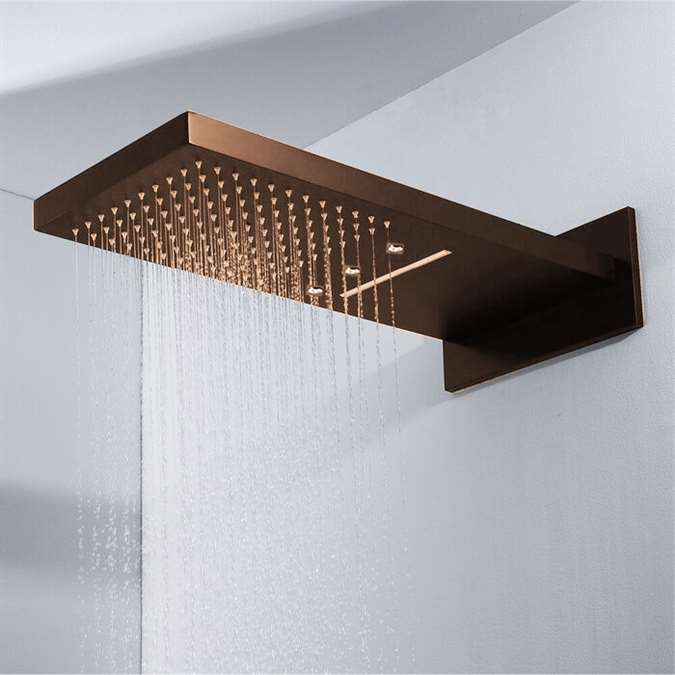
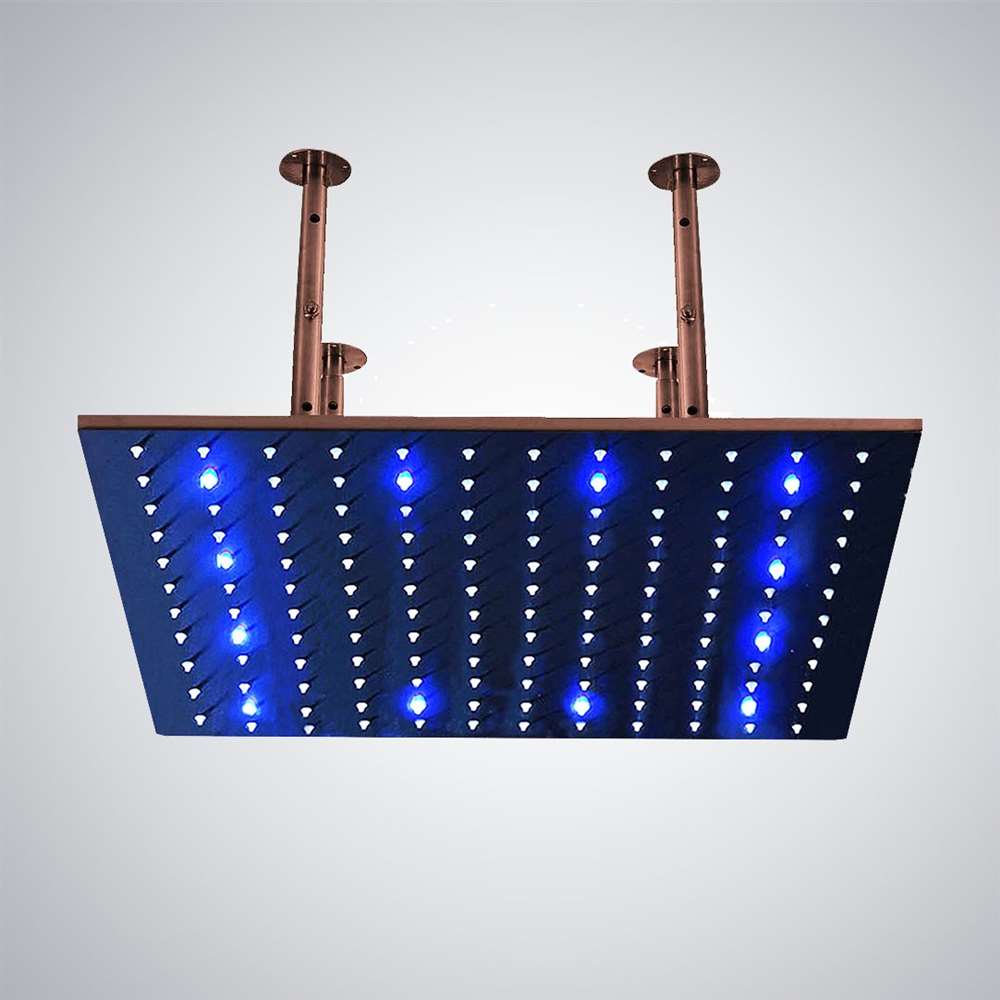
Large-format options

Best-fit guidance
- Hospitality suites & luxury residential: large-format ceiling fixtures for “destination shower” experiences.
- Multi-family: choose simpler, serviceable SKUs unless premium units justify higher maintenance.
- Commercial gyms/spas: confirm durability expectations and parts availability before standardizing.
Specifier notes
- Always validate flow-rate and code compliance per SKU.
- Plan for scale (hard water) and nozzle cleaning, especially on high-nozzle-count designs.
- For LED/feature models: define access, replacement components, and maintenance responsibilities in O&M.
Finish consistency
Spec packages

Warranty / support links
Best-fit
- High-end residential: design-led bathrooms where finish coordination is critical.
- Hospitality upgrades: premium guest experience with predictable design language.
- Multi-family premium tiers: where brand recognition and aesthetics justify cost.
Specifier documentation
Water efficiency
What spec teams like
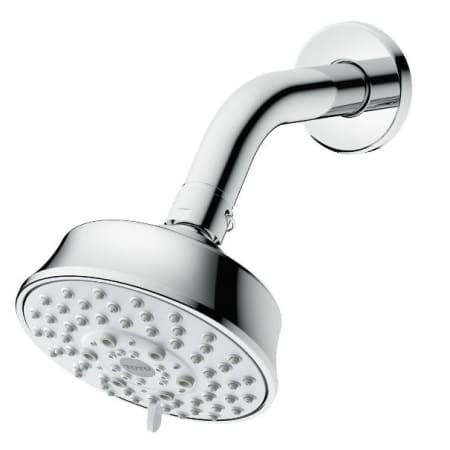
- Clear published flow limits (example: 1.75 GPM / 6.6 L/min on the linked spec sheet).
- Standards/certifications called out in documentation.
- Residential vs commercial warranty terms often spelled out.
Best-fit
- Multi-family & institutional: predictable compliance and documentation.
- Hospitality chains: repeatable SKU standardization with submittals.
- Renovations: when you need a clean compliance story for inspectors.
Wide distribution
Renovation-friendly


Warranty / support links
Best-fit
- Property refreshes: predictable procurement and easier replacement cycles.
- Budget-controlled projects: better total cost control when standardizing across units.
- Mixed portfolios: support portal helps consolidate service workflows.
Performance-first
Hospitality-friendly

Warranty pointer (example)
AEC note: warranty terms can differ between consumer vs commercial applications—always confirm the exact language on the selected SKU’s page.
Best-fit
- Hotels & student housing: performance and durability under frequent turnover.
- Commercial retrofits: familiar service profile for contractors.
- Gyms/spas: consistent spray performance when properly maintained.
FAQ (Specifier + Facilities)
How do I choose between 1.75 GPM, 2.0 GPM, and 2.5 GPM options?
1.75 GPM is the safest compliance baseline. Then match user expectations by pairing efficient heads with
a properly sized valve and supply conditions. If the building has pressure constraints, choose designs that maintain spray feel
at lower flow and plan for scale control (filtration/softening where appropriate).
What certifications should I look for on a compliance-heavy project?
EPA WaterSense, IAPMO/cUPC, and references to ASME/CSA performance standards).
The key is: validate at the exact SKU you intend to submit—do not assume a collection has identical certifications across all variants.
Which brand is easiest for submittals and inspector reviews?
flow rate, installation notes, and codes/standards called out for the exact model.
In this set, the linked TOTO example provides a spec PDF with that structure.
How do large-format ceiling fixtures change the rough-in and maintenance plan?
access for future service. Specify access panels, define responsibility for cleaning, and include replacement/parts strategy
in the O&M manual—especially for feature fixtures (e.g., LED-driven designs).
What should I ask for before standardizing a showerhead across a hotel or multi-family project?
(4) cleaning guidance (finish-safe), and (5) parts/service pathway (where to buy parts, lead times, and whether the cartridge/nozzle components are field-replaceable).
How do I prevent “complaints of weak flow” with efficient showerheads?
and use heads designed to keep perceived spray performance at lower GPM. Also verify the valve is correctly matched to the system
and that debris screens are maintained during commissioning.