Material Choices for Hotel Bathroom Vanities, Tubs, Showers: Trends and Best Practices
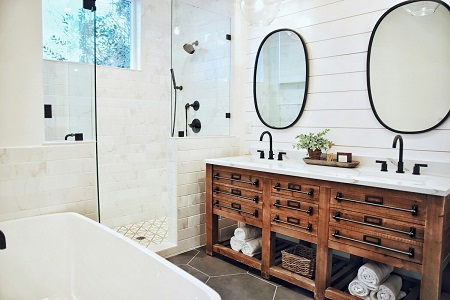
Choosing the right materials for hotel bathrooms means balancing appearance, durability, safety, maintenance, and cost. In high-traffic hotels and restaurants, finishes need to withstand heavy use, frequent cleaning, and occasional misuse while still looking great. Here is a short guide to the latest trends and best practices for tubs, showers, and vanities.
Overall Trends Shaping Material Choice
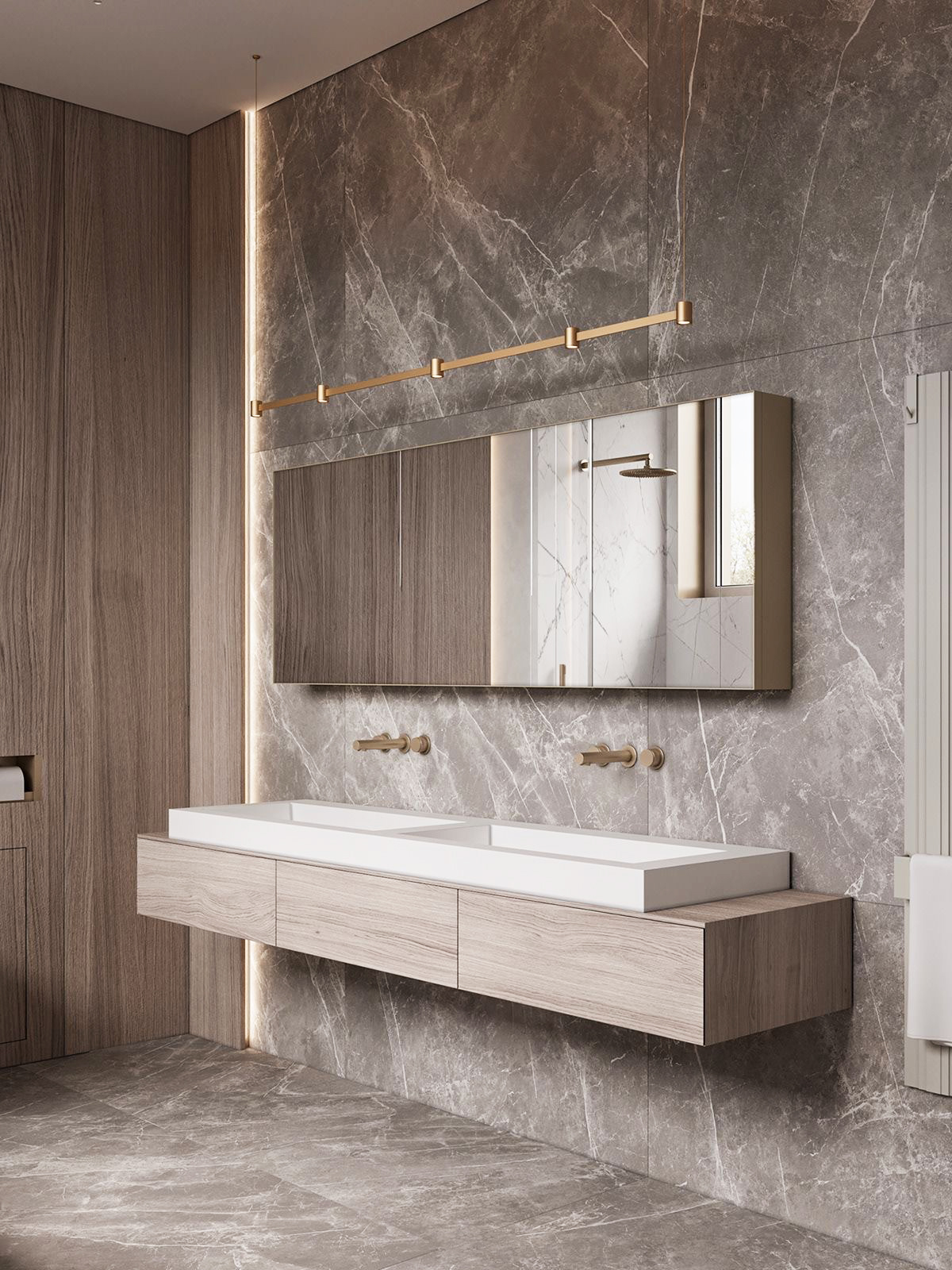
Low-maintenance luxury is in right now: materials that look expensive but don’t require much work to stay clean. Neutral colors like warm grays, soft beiges, and marble-look surfaces remain popular because they don’t show wear as easily and don’t date as quickly. Increasingly, hotel brands are also placing strong emphasis on sustainability and water efficiency. They prefer products made from recycled materials, finished with low-VOC adhesives and coatings, and those that use less water or are designed for easier repair.
Vanities — Materials and Best Practices
Some common choices include engineered-wood cabinets, laminate, thermofoil, solid wood (which is less common in high-traffic areas), and stone or engineered-stone countertops.
- Engineered wood cabinets (plywood/MDF with veneer): If sealed correctly, it’s both cost-effective and dimensionally stable.
- Best practice: use marine-grade plywood or moisture-resistant MDF with a durable veneer, along with raised plinths to keep water from reaching the base. Use commercial-grade drawer hardware for added reliability.
- Laminate and thermofoil: Very easy to care for and highly resistant to stains. For long-lasting performance, choose high-pressure laminates (HPL). Avoid lower-quality vinyl thermofoil in areas with constant water exposure.
- Countertops — Quartz (engineered stone): The best choice for hotels because it doesn’t stain easily, has no pores, and comes in a wide range of finishes—including marble looks that don’t require sealing. Choose a grade with a commercial warranty, and ensure all seams are properly sealed.
- Natural stone (granite/marble): Granite offers an upscale look, and with regular sealing it resists stains and damage very well. Marble, being more porous and requiring more maintenance, is best reserved for high-end suites where added upkeep is acceptable.
- Solid surface (acrylic blends): Can be repaired and kept very clean, with joints that can be made virtually seamless. A strong option for mid-range to upscale properties that want integrated sink-and-countertop solutions.
Design tip: To make cleaning easier, choose under-mount sinks, and ensure the countertop edges have a small radius to help prevent chipping.
Tubs & Showers — Materials and Coatings
Key options include acrylic, fiberglass-reinforced acrylic, cultured marble, enameled steel, cast iron, and tile systems (porcelain or ceramic). Prefabricated solid-surface shower pans are also widely used.
- Acrylic and fiberglass-acrylic: Lightweight, warm underfoot, and cost-effective. Modern acrylic resins resist staining and are easy to repair if scratched.
- Best practice: Use high-impact acrylic with reinforced backing, and ensure the design allows panels to be removed for plumbing access.
- Porcelain/ceramic tile (for walls and floors): Very durable when installed correctly, but grout is the weak point. In high-traffic hotels, choose epoxy grout because it resists staining and soiling. Tile and linear drains can create a high-end, long-lasting look.
- Solid-surface or prefab shower pans: Long-lasting and low maintenance, with fewer joints than tile floors. A good choice for installations that need easy access.
- Cast iron/enameled steel tubs: Very durable but heavy and expensive to install or replace. Best suited for high-end installations where its long lifespan justifies the more complex installation process.
- Coatings and finishes: Slip-resistant floor textures, high-quality enamel or gelcoat that won’t wear down or be damaged by cleaners, and water-resistant sealers for grout and other joints.
Safety Note: Always use slip-resistant finishes (or textured tile) and ensure proper slope to drains for safety. For tubs and wet floors, ADA and local codes may require additional support for grab bars—so be sure to install blocking during the framing stage.
Maintenance, Cleaning and Lifecycle Considerations
- Chemical resistance: Housekeeping in hotels uses strong cleaners, so materials must be able to withstand them. Commercial cleaners work well on quartz, porcelain tile, and high-pressure laminates. Avoid soft or untreated stones unless you have a solid plan for sealing and maintaining them.
- Seams & joints: These are often the first points of failure. Use commercial-grade sealants with strong adhesion and flexibil.
- Accessibility of plumbing: To make repairs easier, design vanities with removable service panels or kickplates.
- Refinishability vs replaceability: You can resurface acrylic and solid-surface tubs, but cultured marble and tile usually require partial replacement. Be sure to factor in the cost and downtime of resurfacing when planning for the full lifecycle.
Sustainability & Indoor Air Quality
Choose materials that use low-VOC finishes and adhesives. Engineered stone often contains resin binders, so select products that clearly disclose their ingredients and carry certifications such as Greenguard. Quartz with recycled content and FSC-certified wood components can also help brands meet their sustainability goals.
Cost vs. Value — Practical Selection Matrix
Use a value-based approach: prioritize durability and low maintenance in standard rooms, and reserve expensive natural stone or specialty fixtures for suites.

Procurement & Specification Tips
- Ask for commercial warranties and third-party test data showing how well the product resists stains, heat, and wear.
- In the maintenance manual, list the surface tolerances, edge profiles, and the recommended schedule for replacing seals.
- Ask for sample panels or mockups—especially for tile layouts and grout options—and test them using the same cleaning products the hotel staff will use.
- Include lead times and the availability of replacement parts in RFQs. Long lead times for custom stone can disrupt renovation schedules.
Common Failure Modes and How To Avoid them
- Grout staining and joint failure: Use epoxy grout, install proper waterproofing membranes (such as bonded membranes beneath tile), and plan for periodic grout cleaning.
- Delamination on vanities: Don’t allow standing water to come into direct contact with cabinet edges; ensure all edges are properly banded and the bases are fully sealed.
- Surface scratches: For tubs that see heavy use, choose acrylic with reinforced backing, or opt for enamel-steel in higher-end areas.
- Color fade or surface dulling: For materials exposed to direct sunlight, ensure they are UV-stable and avoid using harsh abrasive cleaners.
References & resources
- National Kitchen & Bath Association (NKBA) — design guidelines and product references
- Tile Council of North America — tile and grout installation best practices
- International WELL Building Institute — materials & indoor air quality guidance
- Manufacturer product pages (examples): Quartz—Caesarstone, Silestone; Solid-surface—Corian; Acrylic tubs—American Standard, Kohler.