
Operational Costs in Hotel Bathroom Design
Now, hotels are adopting many intelligent bathroom solutions, including touch-and-go faucets, sensors-enabled dispensers, smart toilets, and cloud-based bathroom sensors, to ensure that bathrooms remain cleaner, water and energy wastage is reduced, and a personal touch is provided to all hotel room occupants. IoT hardware, data platforms, and hotel property-management systems (PMS) are all coming together, which means bathrooms are no longer “behind the curtain” of hotel operations; they can now be measured, proactively serviced, and used as a point of differentiation for guests.
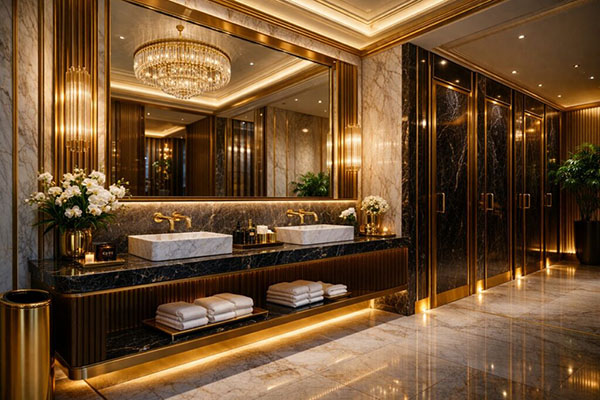
Where Hotels Are Installing Intelligence
Common smart bathroom components in hotels include:
- Touchless faucets and soap dispensers — infrared or capacitive sensors control flow and reduce touchpoints.
- Smart toilets and bidets featuring auto-flush functions and self-cleaning cycles, heated seats, and water-saving functions.
- Occupancy & humidity sensors – Control ventilation systems, lighting systems, and housekeeping routines.
- Supply-level sensors (soap, towel) and battery / health indicators, driving relevant replenishment notifications.
- Central dashboards & alerts — Telemetry from multiple devices—such as usage counts, battery status, and leak detection—gives engineering and housekeeping teams the information they need to take action before any guest complaints arise.
These innovations improve the experience for guests (better cleanliness and convenience) and for the business (fewer emergency calls and lower utility bills). Research and vendor case studies show that switching to sensor-driven devices can lead to significant water and energy savings.
Guest Experience: Subtle But Powerful
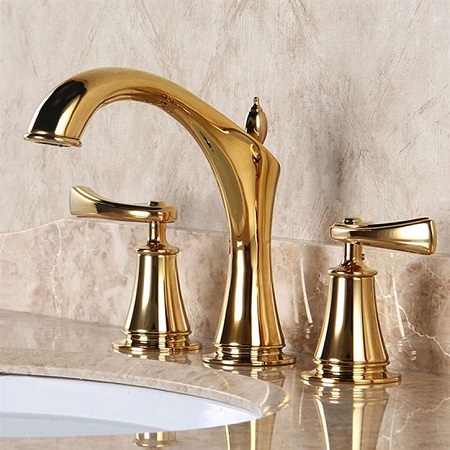
Smart bathrooms influence guest perception in three ways:
- Hygiene and trust. Contactless fixtures help guests feel less likely to get sick and tend to raise cleanliness scores in guest surveys. Many post-pandemic travelers also say that contactless features are an important factor in their decision to book.
- Convenience and comfort. Guests can program functions like water temperature, heated seats, and lighting scenes through the use of their guest profile, loyalty card, or in-room tablet. The little things that count go a long way in making the guests happy and come back for more.
- Perceived value. The smart toilet, touch faucets, and mood lighting are some of the applications of intelligent fixtures used by upscale hotels to create a story of luxury.
Sustainability & Measurable ROI
The case on both environmental and economic grounds is strong and quantifiable:
- Water Conservation: Water-saving faucets and optimized flushing mechanisms can result in 15-50% water savings, and in conservative designs, around 25-35% water savings are reported. This directly cuts hot-water energy and sewage costs as well.
- Energy savings: Lower utility bills come from reduced hot water use, smarter ventilation systems that run only when needed, and lower HVAC loads thanks to improved humidity control. Vendor case studies also show that reducing hot water heating can lead to significant kWh savings.
- Efficiency of Operation: The use of sensors informing about soap and paper levels, as well as the status of soap dispensers, can considerably reduce unnecessary walks into the toilets for cleaning and subsequent stocking of the same, thus enabling attention to areas of need only.
Many hotels can recover the cost of retrofitting in just a few months to a few years, depending on the property’s size, room-rate mix, and local utility costs. This is possible because savings can be clearly tracked—litres of water used, kWh saved, and reductions in maintenance calls.
Design & Implementation Best Practices
To succeed, hotels must treat bathroom intelligence as a systems project, not a gadget install:
- Start with outcomes. Set a clear goal for what you want to improve—guest satisfaction, water use, housekeeping efficiency, or brand differentiation. Your hardware choices should be based on those priorities.
- Prioritise standards & integrations. Choose devices that use open APIs or standard protocols such as MQTT or REST. For automated workflows, integrate them with the PMS, building management systems (BMS), and housekeeping apps.
- Data hygiene & privacy. Collect only operational telemetry—such as device health, usage counts, and supply levels. Avoid collecting any bathroom data that is biometric or personally identifiable. Make sure that access to the dashboards is restricted to qualified roles, and all data is encrypted.
- Pilot, measure, scale. The pilot should be performed on 10 to 50 rooms, with the measurement of water, energy, and operational key performance indicators, as well as feedback from guests. Subsequently, it can be scaled up for more rooms. Pilots help determine optimal sensor placement in real-world conditions, reduce false triggers, and identify the training needs of cleaning staff.
- Maintenance model. Set SLAs for batteries, sensors, and dispensers. Choose devices that support remote health checks and can be serviced locally—for example, models with replaceable battery packs and modular sensor components.
Risks And How To Mitigate Them
- False triggers / hygiene failures. To prevent problems with untrustworthy or erratically performing sensors, it is best to select sensors that have already been tested for their efficacy.
- Connectivity outages. If the cloud goes down, devices should still function through manual modes of flushing and water flow settings as a fallback function.
- Guest acceptance. Some guests may like to have control by hand. Manual controls and signs should always be provided and simple to understand.
- Vendor lock-in. Pick open platforms or gateways that can convert various protocols to easily change hardware suppliers without having to rethink your system.
Future directions
Technology in bathrooms is shifting towards predictive maintenance and personalized experiences for hotel visitors. Soon, algorithms that can forecast refill requirements in dispensers, slow leaks, and assign guest preferences to particular visitors based on profiles should be possible, ensuring that regular visitors receive their settings of choice. Market research indicates that smart bathroom products will continue to grow in adoption, with hotels increasingly embracing them as prices fall and system compatibility improves.
Quick Checklist For Hotel Decision-Makers
- Define top 3 objectives (savings, hygiene, guest experience).
- Budget for pilot + 12-month monitoring.
- Require APIs and cloud/dashboards; insist on data export.
- Train housekeeping and engineering teams before guest rollout.
- Use standards for security, and keep manual overrides.
Selected References
- Future Market Insights — Smart Bathroom Market Size & Forecast 2025–2035.
- Polaris Market Research — Smart Bathroom Market Trends 2025.
- Oras Stories — How touchless faucets can help save water.
- FacilityApps / Ophardt — The Smart Washroom, dispenser and dashboard illustrations.
- EPA WaterSense — Bathroom faucet flow guidelines and savings potential.
- Mordor Intelligence — Smart Toilet Market Analysis 2025.
- Academic reviews & hospitality theses on guest adoption and satisfaction with smart hotel technologies.