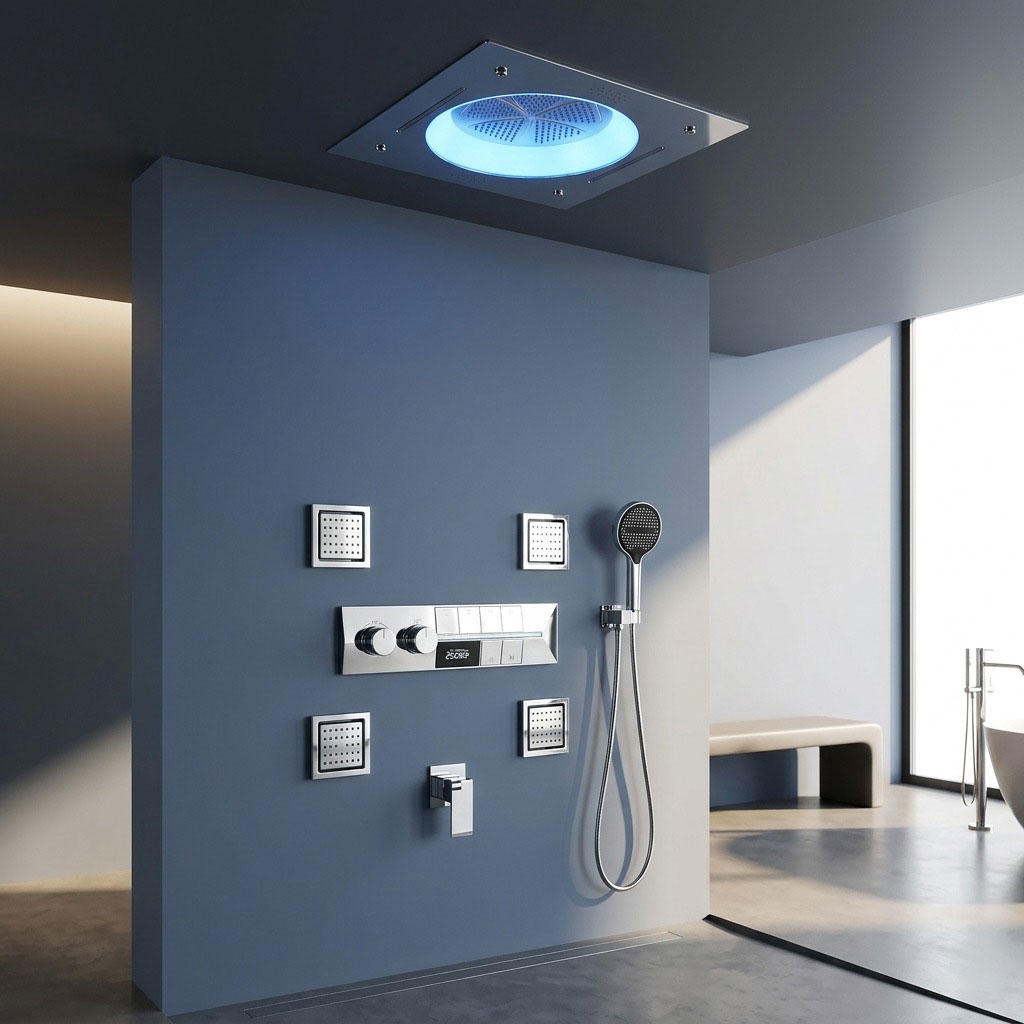
Shower Panel vs Traditional Shower System: Which Is Better?

Shower panel and traditional shower system comparison for hotel bathrooms
Hospitality Bathroom Specification Shower Panel vs Traditional Shower System
HospitalityBath.com · AEC Hotel Shower Specification Guide

Shower Panel vs Traditional Shower System: Hotel Spec Guide

Shower panels and traditional shower systems can both work in hospitality, but they solve the bathroom differently. A shower panel consolidates multiple functions into a visible vertical assembly, while a traditional shower system coordinates the showerhead, valve, diverter, hand shower and optional body outlets individually through the wall construction.

For hotel projects, the stronger choice depends on hydraulic demand, available pressure, hot-water capacity, wall construction, waterproofing, service access, housekeeping, accessibility and replacement-parts strategy. The number of shower functions alone should not determine the specification.

Shower Panels Traditional Shower Systems Hotel Bathrooms AEC / MEP Hydraulic Demand WaterSense Waterproofing Lifecycle Maintenance
Direct Comparison

Which Shower System Is Better for Hospitality Projects?

Neither configuration is universally better. Shower panels can consolidate a multi-function shower into one architectural object, while traditional systems provide more flexibility in outlet placement, valve selection, concealed plumbing and component replacement.

Shower Panel Systems

Shower panels group shower functions on or within a vertical assembly. Depending on the selected system, these functions can include rainfall, body sprays, a hand shower and integrated controls.

  • Consolidated visual composition
  • Multiple shower functions in one assembly
  • Can suit selected renovation conditions
  • Combined flow must be checked when outlets operate together
  • Panel-specific replacement parts need lifecycle review

Traditional Shower Systems

Traditional systems coordinate individual shower components through the wall. They may be very simple or may use thermostatic valves, diverters, hand showers, rainfall heads and body outlets.

  • Flexible outlet positioning
  • Broad valve and trim selection
  • Individual components can often be replaced separately
  • Requires precise concealed rough-in
  • More penetrations can increase waterproofing coordination
Existing Project Images

Shower Panel & Traditional Shower Configurations

These three images from the existing article are retained and displayed in a consistent square format for a cleaner AEC-style layout.
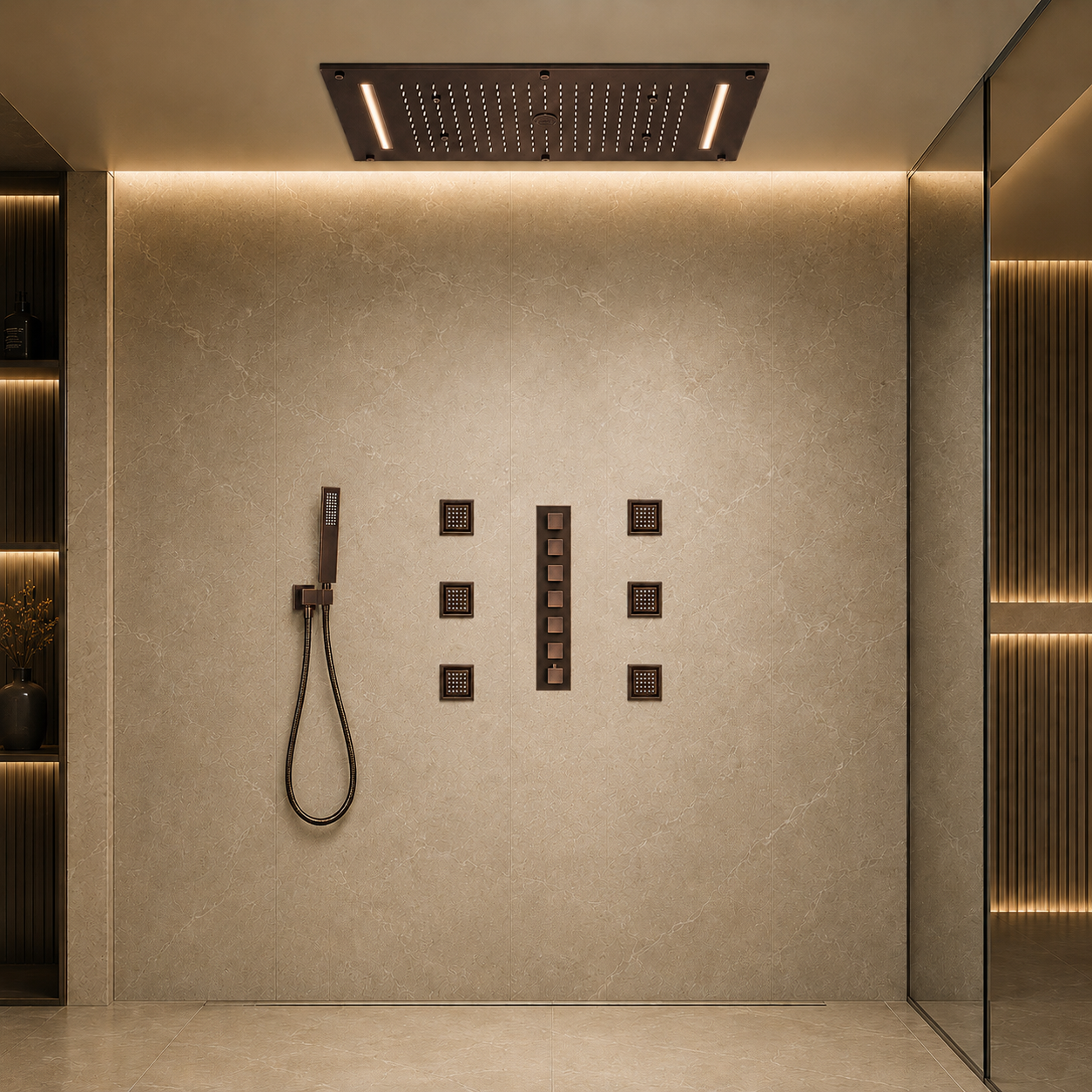
Modern shower panel with rainfall shower head and multiple body jets
Vertical shower panel with multiple outlets integrated into one assembly.
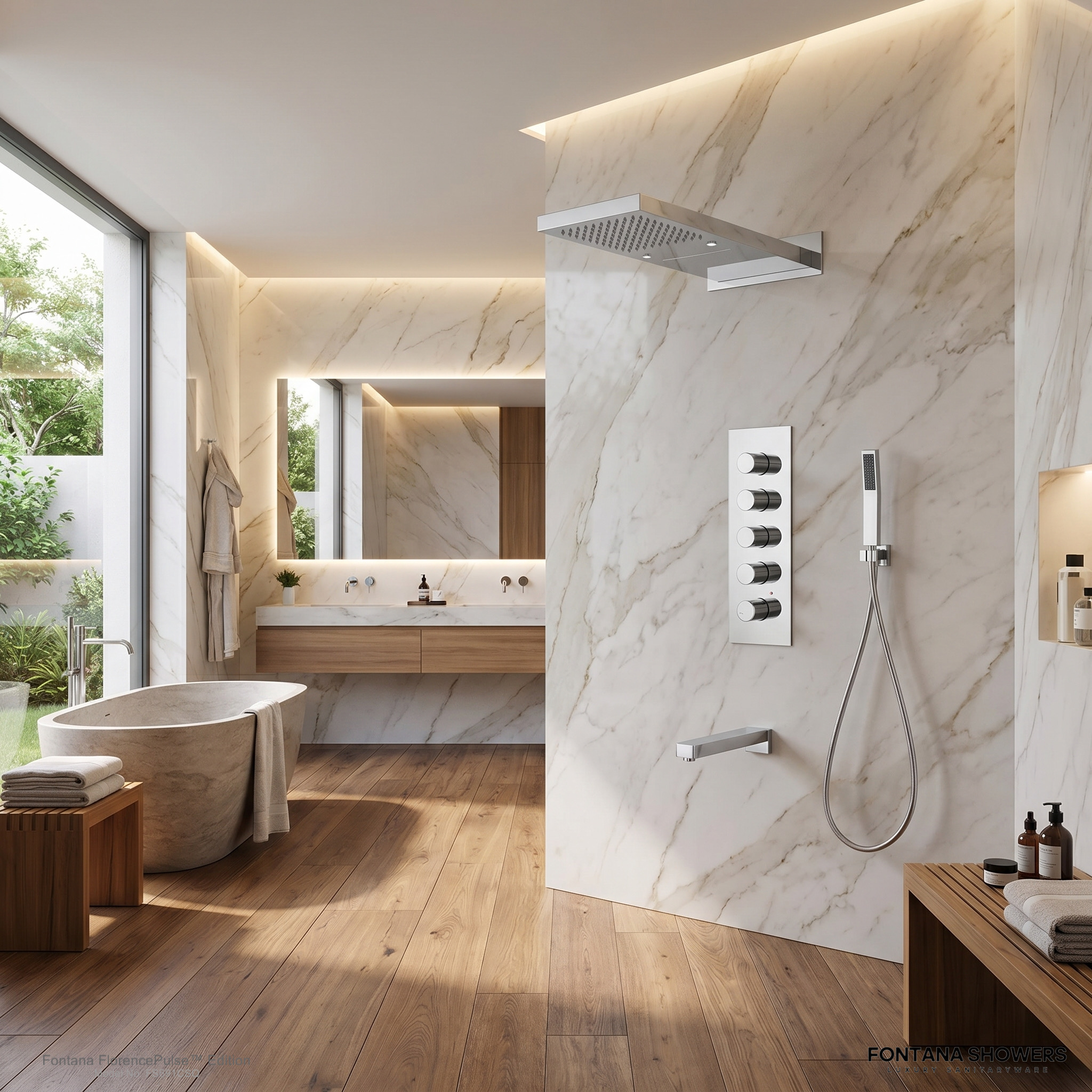
Traditional wall mounted shower system for hotel bathroom
Traditional systems allow the head, controls and accessories to be positioned independently.
Shower panel and traditional shower system comparison
Installation method, water demand and serviceability should guide selection.
AEC Comparison Matrix

Shower Panels vs Traditional Shower Systems

Specification Factor Shower Panel Traditional System Hotel Design Implication
Component Layout Functions concentrated in a vertical assembly. Components individually located around the shower. Traditional systems provide greater outlet-location flexibility.
Rough-In Can consolidate several connections into one panel zone. Valve bodies and outlets require separate coordination. Exact manufacturer rough-in must be confirmed before wall closure.
Simultaneous Flow Can be high when multiple functions operate together. Depends on diverter and valve configuration. MEP teams should calculate maximum intended operating flow.
Hot-Water Demand Potentially high with multi-outlet use. Can be controlled through valve and outlet strategy. Coordinate with hotel domestic hot-water capacity.
Waterproofing Several interfaces may be hidden behind one assembly. Separate penetrations require detailed sealing. Membrane continuity must be maintained around every penetration.
Serviceability Depends heavily on panel access and parts availability. Individual trims and valves may be serviced independently. Review replacement parts before portfolio-scale procurement.
Design Flexibility Controlled largely by the panel geometry. High flexibility for head, hand shower and controls. Traditional systems suit highly customized elevations.
Housekeeping Large exposed surface requires frequent cleaning. More individual fittings but less continuous surface area. Include housekeeping in the room mock-up review.
Hydraulic Performance

Multi-Outlet Showers Require a Real Flow-Demand Calculation

A shower’s visual complexity does not reveal its actual plumbing demand. Designers should establish which outlets can operate together and evaluate the resulting flow against supply pressure, valve capacity and domestic hot-water infrastructure.

Simultaneous Outlets Rainfall heads, body sprays and hand showers can create substantially different demand when used together.
Operating Pressure Performance should be checked against actual pressure conditions at the guestroom, especially on upper floors.
Valve Capacity The selected mixer and diverter must be able to support the intended outlet combination.
Pipe Sizing Branch sizing should reflect calculated demand instead of visual fixture size.
Pressure Zoning Tall hotels may require pressure management to maintain consistent shower performance between floors.
Working Mock-Up Operate the intended outlet combinations before repeating the system across a large room inventory.
Domestic Hot Water

Shower Selection Can Affect Hotel Hot-Water Capacity

Multi-function systems should be evaluated as part of the domestic hot-water design. The more outlets guests can operate at once, the greater the potential impact on peak water heating and distribution demand.

Peak Guest Demand Morning and evening demand may occur simultaneously across large numbers of rooms.
Heating Capacity Higher combined shower flow can increase required generation and recovery capacity.
Recirculation Distribution and recirculation losses should also be considered in overall water-heating performance.
Water Efficiency

Low Flow Should Be Reviewed Together With Guest Performance

Lower flow can reduce both water use and hot-water energy, but the specification should also consider pressure, spray coverage and guest experience. A multi-outlet installation should be evaluated as a complete operating system rather than by one showerhead flow value.

Outlet Flow Verify the flow rate of each selected shower function.
Combined Demand Several efficient outlets operating together can still create substantial total flow.
Spray Experience Evaluate coverage and perceived comfort along with published flow.
Hot-Water Energy Lower hot-water flow can reduce the energy required for water heating.
Room Inventory Small differences in fixture demand multiply across large hotel portfolios.
Operational Verification Post-opening water data can help verify whether design assumptions produce actual savings.
Rough-In Coordination

Resolve the Concealed Shower System Before Wall Closure

Confirm hot and cold supply locations.
Verify valve depth against finished wall thickness.
Coordinate structural backing and mounting.
Keep cartridges and serviceable components accessible.
Detail every wall penetration with the waterproofing assembly.
Coordinate diverter outlets before tile installation.
Check panel dimensions against glass, niches and benches.
Verify final outlet heights in the guestroom mock-up.
Wet-Area Detailing

Waterproofing Must Remain Continuous Around Shower Penetrations

Panel mounting points, pipe connections, valve bodies, shower arms, handheld outlets and body sprays all interact with the waterproofed wall assembly. The shower format changes the detailing, but it does not remove waterproofing responsibility.

Panel Mounting Fasteners and connections should not compromise the membrane.
Valve Bodies Coordinate valve depth and seals before decorative finishes are installed.
Body Sprays Multiple outlets increase the number of waterproofed wall interfaces.
Hand Shower Wall elbows and slide rails require secure backing and sealed penetrations.
Inspection Inspect waterproofing before trim conceals critical connections.
Leak Diagnosis Provide enough access to distinguish plumbing leaks from enclosure failure.
Facility Operations

Lifecycle Serviceability Can Matter More Than First Cost

Hotel bathrooms are repeated assets. A service problem that appears minor in one room can become expensive when the same shower system is installed across a large room inventory.

Shower panels should be reviewed for access to cartridges, hoses, diverters, jets and internal connections. Facilities teams should understand whether the panel can be removed without damaging the finished wall and whether proprietary replacement parts will remain available.

Traditional systems create a different maintenance model. Individual trims and cartridges can often be replaced separately, but concealed valves still require accurate rough-in and accessible service components.

Whichever format is selected, the operations package should identify the valve, cartridge, diverter, outlets, replacement parts and maintenance procedure clearly enough that engineering teams do not need to reverse engineer the installation after a failure.

Accessibility Coordination

Shower Controls Must Coordinate With the Accessible Bathing Layout

A shower panel or traditional system is not inherently accessible by itself. Controls, hand showers, seats, clearances, grab bars and the accessible route must be coordinated with the governing project requirements.

Control Location Place controls within applicable reach requirements.
Hand Shower Coordinate hand-held spray position with the accessible layout.
Grab Bars Body jets and panels should not conflict with required bar locations.
Seat Coordination Where required, controls and spray should remain usable from the seat.
Transfer Space Decorative components should not intrude into required access zones.
Project Verification Confirm the exact accessibility standard and local jurisdiction.
AEC Submittal Review

What to Verify Before Shower Approval

Exact manufacturer and model.
Current installation instructions.
Hot and cold supply requirements.
Operating pressure range.
Individual outlet flow rates.
Permitted simultaneous outlet operation.
Valve and diverter capacity.
Domestic hot-water demand.
Wall thickness and rough-in depth.
Structural backing requirements.
Waterproofing penetrations.
Service access.
Replacement-parts availability.
Finish-cleaning requirements.
Accessibility coordination.
Room mock-up approval.
Government & Technical References

Independent Resources for Hotel Shower Specification

Manufacturer information should be reviewed alongside independent water efficiency and accessibility guidance before final project approval.


U.S. EPA WaterSense — Showerheads Water-efficiency and performance guidance for qualifying showerheads.
EPA WaterSense — Commercial Buildings Facility water-management guidance applicable to hospitality properties.
EPA WaterSense — Best Management Practices Metering, maintenance and operational water-efficiency guidance.
EPA WaterSense — Hotels & Facility Types Hotel and commercial-building water-use guidance.
U.S. Access Board — Bathing Rooms Accessibility guidance covering bathing rooms, showers and related elements.
U.S. Access Board — Plumbing Elements Technical accessibility provisions for plumbing and bathing facilities.
Hotel Shower FAQ

Questions Designers, Engineers & Owners Ask

Are shower panels better than traditional shower systems?
Not universally. Shower panels consolidate multiple shower functions, while traditional systems provide greater flexibility in component placement and concealed plumbing. Project conditions determine the stronger option.
Do shower panels use more water?
Not automatically. Water use depends on each outlet’s flow rate and whether multiple outlets can operate simultaneously.
Which system is better for a hotel renovation?
Existing supply locations, wall depth, waterproofing and demolition limitations should determine the choice. Some panel systems can simplify selected retrofit conditions.
Which is better for luxury hotel suites?
Both can work. Panels provide an integrated spa-oriented appearance, while traditional multi-outlet systems offer more freedom over rainfall heads, hand showers, body sprays and control locations.
Can multi-function showers affect hot-water sizing?
Yes. When several outlets operate simultaneously, their combined flow can increase room-level and building-level hot-water demand.
What should be tested in the hotel shower mock-up?
Test outlet combinations, pressure, temperature stability, spray coverage, splash, drainage, control usability, cleaning workflow, accessibility and service access.
Which system is easier to maintain?
Traditional systems may provide easier individual component replacement, while a well-designed panel can also be serviceable. The deciding factor is access to cartridges, valves and replacement parts.
Is the most expensive shower system necessarily better?
No. For hotel operation, reliable valves, accessible components, waterproofing, consistent pressure and available replacement parts are generally more important than the number of shower functions.
Hospitality Specification Principle

Select the Shower as a Plumbing System, Not Only a Guest Feature

Shower panels can package multiple functions into one clean visual assembly, while traditional shower systems provide more control over outlet placement, valve architecture and component replacement. For hotel projects, the better system is the one that delivers the desired guest experience without excessive hydraulic demand, difficult service access, waterproofing risk or unnecessary maintenance complexity.

Imani Greer

Imani Greer is a staff writer and editorial team member at hospitalitybath.com, covering hospitality faucets, sinks, accessories, materials, and maintenance considerations. Imani's articles are researched and developed using manufacturer resources, published guidance, product data, and attributable references.