You are currently viewing Smart Shower Brands for Hotels: AEC Comparison

Smart Shower Brands for Hotels: AEC Comparison

HospitalityBath.com · Smart Shower Specification Guide

Best Smart Shower Brands for Hotels

The strongest smart shower brands for hospitality and upscale multi-residential projects include FontanaShowers, Kohler, GROHE, Moen, Hansgrohe, Delta and BathSelect. The right platform depends less on the number of digital features and more on valve architecture, outlet capacity, power and network strategy, commissioning, serviceability, cybersecurity, replacement-parts support and how easily a guest can use the shower without instruction.

For flagship suites and wellness rooms, full digital or multi-outlet platforms can support a premium experience. For large guestroom inventories, simpler thermostatic or pressure-balanced systems with intuitive controls often reduce commissioning and lifecycle risk. The best hospitality strategy is usually to standardize the core plumbing platform and add advanced smart features only where they create measurable guest or operational value.

Smart Shower Brands Hotel Smart Showers Hospitality Bathrooms Digital Showers AEC Specification MEP Coordination IoT Cybersecurity Commissioning
Quick Comparison

Best Smart Shower Brands for Hotels: What Each Does Best

Smart-shower platforms should be compared as complete building systems. The controls may be visible to guests, but long-term success also depends on concealed valves, plumbing capacity, electrical infrastructure, connectivity, firmware support, replacement parts and commissioning.

FontanaShowers

Multi-outlet digital and spa-oriented shower configurations suited to projects seeking rainfall, body outlets, hand showers and coordinated digital control within a statement bathroom. Hospitality suites + wellness

Kohler

Digital shower-control ecosystems are particularly relevant where water, lighting, sound, steam or broader branded wellness experiences need to be coordinated. Integrated luxury experience

GROHE

SmartControl-style interfaces emphasize tactile push-and-turn operation and thermostatic control rather than making the guest dependent on a mobile application. Intuitive guest controls

Moen

Connected shower platforms can support digital controls, personalized settings and app-oriented functionality where projects intentionally want a residential smart-home experience. Branded residences + extended stay

Hansgrohe

Multi-sensory shower concepts can coordinate water delivery with curated wellness experiences where experience design justifies more complex controls and commissioning. Destination spa environments

Delta

Broad plumbing-market familiarity and conventional valve infrastructure can make Delta relevant where owners want selective smart functions without making the entire room dependent on a highly customized platform. Scalable conventional-to-smart strategy

BathSelect

Large rainfall and spa-style shower systems can support hospitality rooms where broad coverage, finish coordination and digital or mechanical control options are central to the bathroom concept. Visual spa + rainfall systems
Smart Shower Environment

Smart Shower Design Is More Than a Digital Controller

The strongest hospitality installations coordinate the complete shower environment: water delivery, temperature, outlet selection, lighting, finish, enclosure geometry and the way a guest physically interacts with the system.

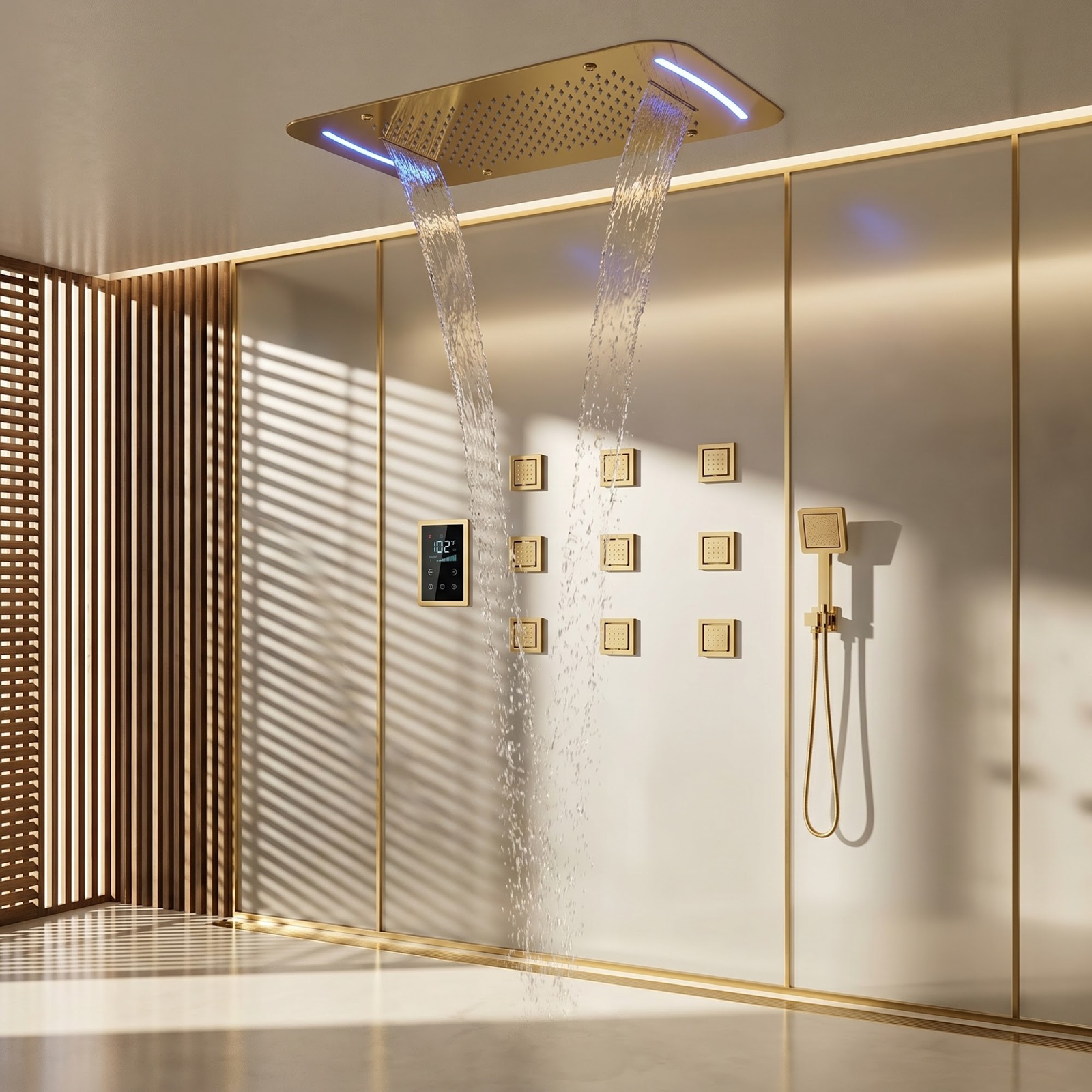
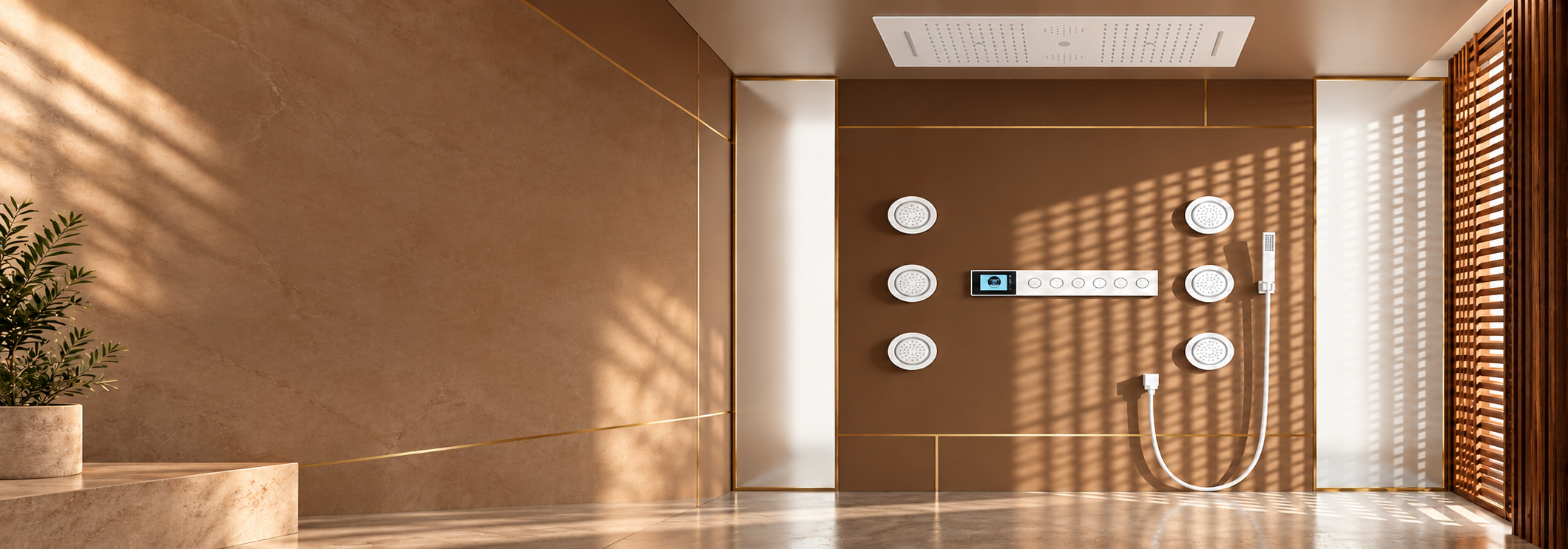
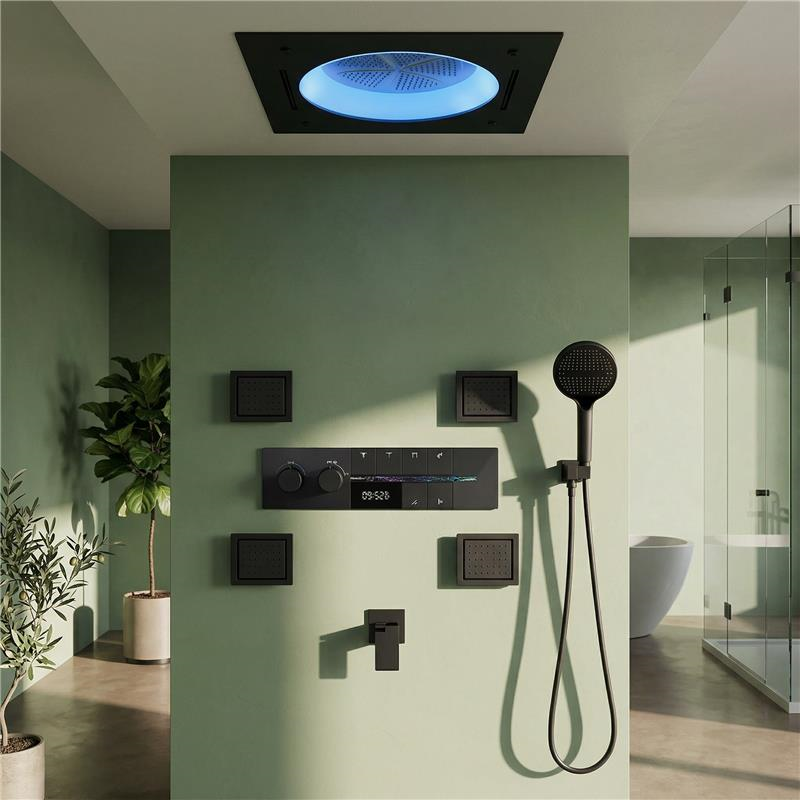
Modern hospitality bathroom with integrated smart shower concept
Smart shower systems should be coordinated with the complete hospitality bathroom rather than specified as isolated controls.
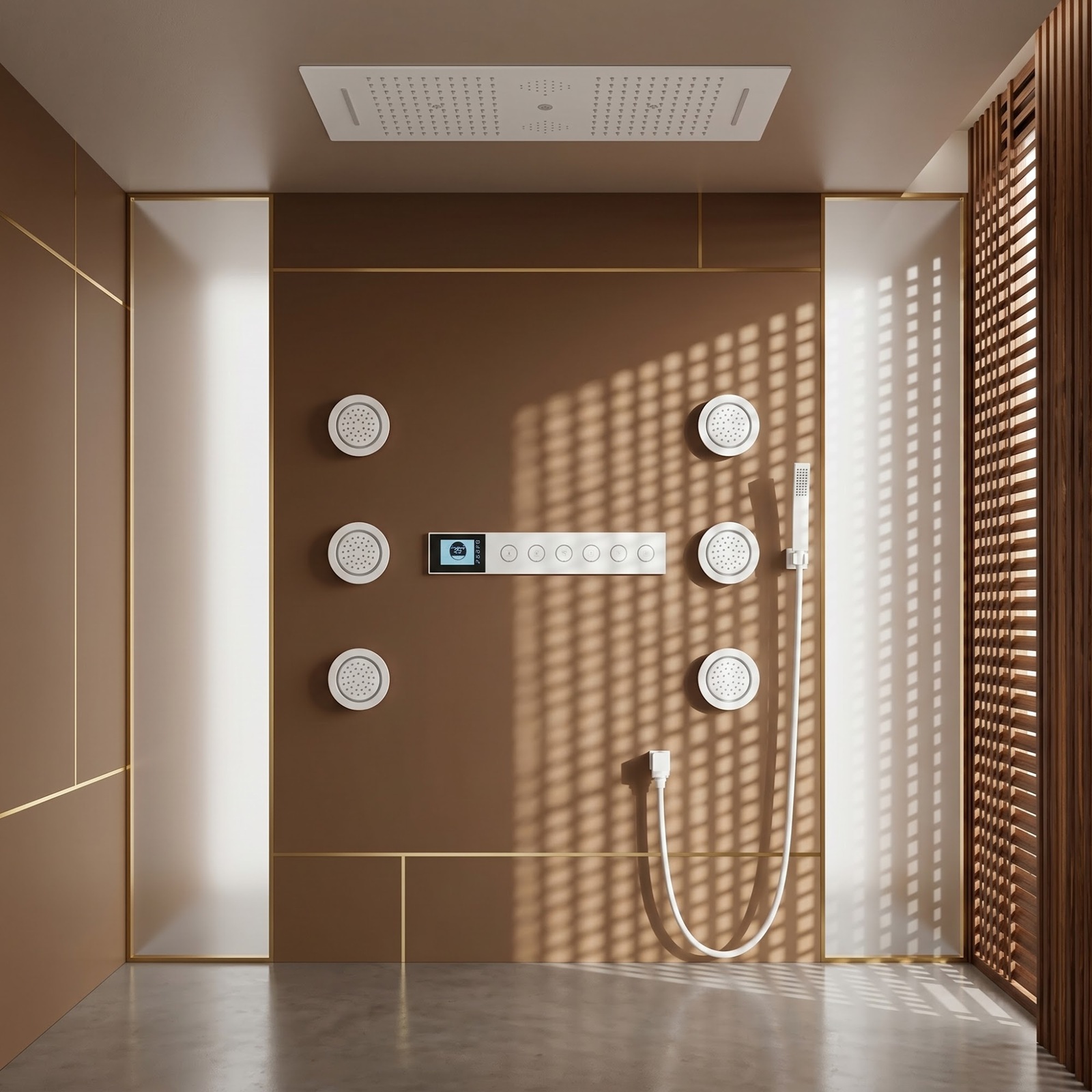
Premium vertical smart shower environment
Premium shower environments can combine multiple outlets with intuitive local control.
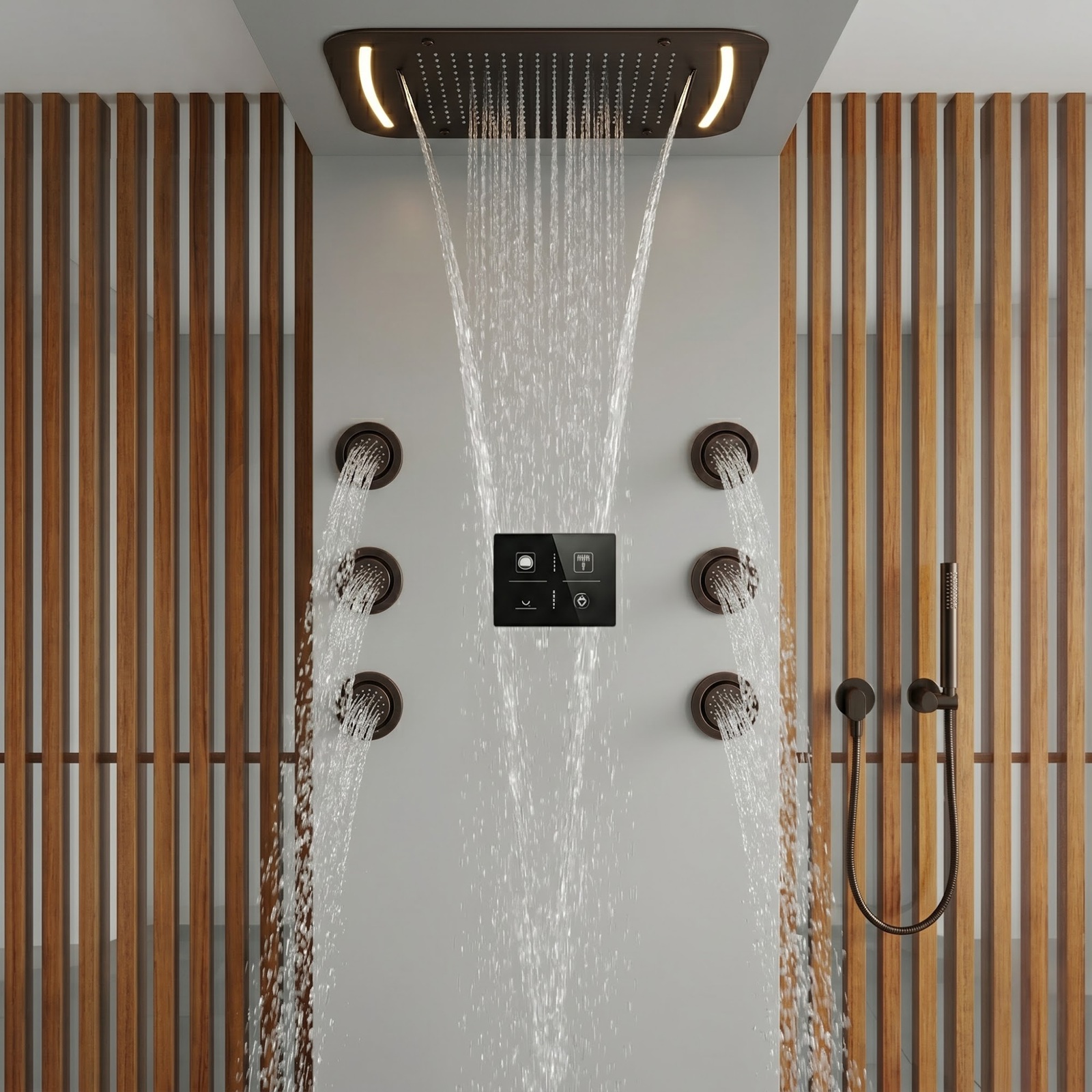
Fontana smart spa shower systems for hospitality applications
Spa-oriented systems can package rainfall, hand shower and other outlets as one coordinated guest experience.
Brand Comparison Matrix

Smart Shower Platforms by Project Use Case

The matrix is intended as an AEC screening tool rather than a substitute for current product submittals. Model availability, controls and connectivity can change, so project teams should verify the exact platform offered at the time of specification.

Brand Platform Direction Best Hospitality Use Key AEC Review
FontanaShowers Multi-outlet digital and smart spa shower systems. Flagship suites, wellness guestrooms and spa-oriented hospitality bathrooms. Outlet count, valve capacity, power, rough-in, simultaneous flow and service access.
Kohler Digital shower control and integrated wellness-oriented ecosystems. High-end branded suites, smart rooms and integrated wellness spaces. Controller location, digital valve access, power and ecosystem dependency.
GROHE Thermostatic, push/turn and multi-outlet control strategies. Premium guestrooms where intuitive physical control is a priority. Valve capacity, outlet selection logic, pressure and cartridge serviceability.
Moen Connected digital-shower architecture with personalized control capabilities. Extended-stay, residential-style suites and smart-living concepts. Connectivity, credentials, software lifecycle and fallback behavior.
Hansgrohe Experience-oriented multi-sensory and digital shower concepts. Luxury spa suites and design-driven wellness hospitality. Integration scope, commissioning complexity and long-term support.
Delta Broad conventional shower infrastructure with selected digital or connected options. Hotels prioritizing familiar service infrastructure with selective technology. Confirm exact smart functionality for the selected line and project.
BathSelect Spa, rainfall and multi-outlet shower configurations with digital or mechanical control strategies. Hospitality suites where visual impact and broad shower coverage matter. Verify exact controller, valve, outlet flow, power and installation requirements.
Premium Shower Categories

Smart Features Should Follow the Guestroom Strategy
Premium spa smart shower comparison for hospitality bathrooms
Premium smart shower selection should start with room category and guest experience rather than feature count.
High-end spa and smart shower systems comparison
High-end spa and smart shower systems.
Craftsman inspired bathroom with timber and tiled shower
Many guestroom types benefit more from durable, intuitive shower hardware than from extensive connectivity.
AEC Definition

What “Smart Shower” Should Mean on a Hospitality Project

Consumer marketing often equates smart showers with apps and voice control. For hospitality, intelligence should be evaluated more broadly: repeatable temperature control, clear outlet selection, diagnostics, commissioning, usable presets, resilient local operation and a realistic support path.

Digital Mixing Electronic control can provide repeatable setpoints, but concealed valve access and failure behavior need to be understood.
Local Control Guests should be able to operate the shower from the room without relying on a personal phone or account.
Presets Preset temperatures or outlet combinations can improve usability when labels are clear and the interface remains intuitive.
Diagnostics Error reporting can help engineering teams if fault information is understandable and accessible to authorized staff.
Connectivity Network features create responsibility for credentials, updates, segmentation, software support and decommissioning.
Fallback Operation A guest should not lose basic shower functionality because an app, cloud service or optional integration becomes unavailable.
Electrical Coordination

Power and Redundancy Need to Be Resolved Before Wall Closure

Power Source Confirm whether controllers and digital valves require dedicated, low-voltage or other manufacturer-defined power.
Transformer Access Avoid concealing serviceable electrical components where tile, stone or millwork must be removed for replacement.
Outage Behavior Understand what the guest experiences when normal power is interrupted.
Electrical Zone Coordinate electrical components with wet-location requirements and the manufacturer’s installation instructions.
Cable Routing Show control and power routes before wall assemblies are finalized.
Future Replacement Cables, controllers and power supplies should be replaceable without destructive bathroom work where practical.
IT + Cybersecurity

Connected Smart Showers Belong in the Hotel IT Narrative

If a shower communicates with an app, local network, cloud service or building platform, the technology should be reviewed as a connected product. Procurement should address account ownership, authentication, updates, support life, network dependency and end-of-life procedures rather than leaving those questions until opening.

Identify whether the product requires internet connectivity.
Determine whether basic showering works without cloud access.
Document who owns administrative credentials.
Confirm how firmware or software updates are delivered.
Define who authorizes updates after hotel opening.
Ask how security vulnerabilities are communicated to owners.
Establish network segmentation requirements with the IT team.
Define decommissioning procedures when a controller is replaced.
Confirm whether user data or usage information is collected.
Review manufacturer support expectations across the planned asset life.
MEP Coordination

Smart Controls Do Not Eliminate Hydraulic Design

The controller may be digital, but water still depends on pressure, pipe sizing, valve capacity, outlet flow and available domestic hot water. Multi-outlet smart showers should therefore be analyzed as plumbing systems first and digital products second.

Outlet Count Establish how many rainfall heads, hand showers or body outlets are connected to the valve.
Simultaneous Operation Determine which outlets can operate at the same time instead of summing every outlet automatically.
Valve Capacity Confirm the selected digital or thermostatic valve can support the intended operating combination.
Available Pressure Tall hotels can experience different pressure conditions across zones and floor levels.
Hot-Water Demand Premium multi-outlet showers can materially affect domestic hot-water sizing when deployed at scale.
Guestroom Mock-Up Operate actual outlet combinations at representative pressure before repeating the system across many rooms.
Water + Energy

Smart Does Not Automatically Mean Water Efficient

Digital control can improve repeatability and may support shorter or more predictable use patterns, but total water demand still depends on outlet flow and simultaneous operation. Water efficiency should therefore be verified at the fixture level rather than assumed from the presence of digital controls.

Published Flow Record the flow rate of every shower outlet included in the room specification.
Combined Flow Multiple efficient outlets can still create high total demand when used simultaneously.
Heating Energy Hot-water demand connects shower flow directly to hotel energy use.
Pressure Performance Verify the guest experience at realistic pressure rather than only at ideal showroom conditions.
WaterSense Where applicable, review qualifying showerhead products against current EPA WaterSense criteria.
Portfolio Impact Small room-level differences in water use can become substantial across a large hotel or residential portfolio.
Deployment Strategy

Where Smart Showers Make the Most Sense

Flagship Suites Premium digital controls can support a visible differentiation strategy in a limited number of high-value rooms.
Wellness Rooms Presets, multiple outlets and coordinated sensory features can reinforce a defined wellness concept.
Hotel Spas More complex systems may be justified where staff, maintenance and operating procedures are already more specialized.
Branded Residences Residents may place greater value on personalization and connected-home functionality than short-stay guests.
Extended Stay Repeated occupancy can make personalized local presets more relevant than in short-stay rooms.
Standard Guestrooms Reliable mechanical or locally controlled digital systems may deliver a better lifecycle balance than full connectivity.
Repeatable Specifications

Three Smart-Shower Specification Strategies

Smart-Ready Standard Guestroom

Keep standard rooms robust while allowing future technology upgrades.

  • Quality thermostatic or pressure-balanced valve
  • Rain or multi-function head
  • Hand shower where required by room standard
  • Logical control location
  • Future low-voltage pathway where justified
  • Standardized service parts

Local Digital Spa Suite

Use digital control without making core operation dependent on external connectivity.

  • Digital mixing valve
  • Local in-shower controller
  • Rainfall + hand shower + optional body outlet
  • Simple local presets
  • Documented service access
  • Clear outage and fallback strategy

Connected Flagship Shower

Reserve deeper connectivity for rooms where it supports a clear experience or commercial objective.

  • Multi-outlet digital platform
  • Lighting or wellness integration where appropriate
  • Dedicated power coordination
  • Defined network ownership
  • Firmware and cybersecurity plan
  • Owner sign-off on lifecycle support
Shower Configuration Planning

Outlet Configuration Should Be Documented Before Procurement

These original system illustrations are retained as square images. Use the room schedule to record outlet count, control type, valve platform, finish, flow assumptions, power and network requirements.
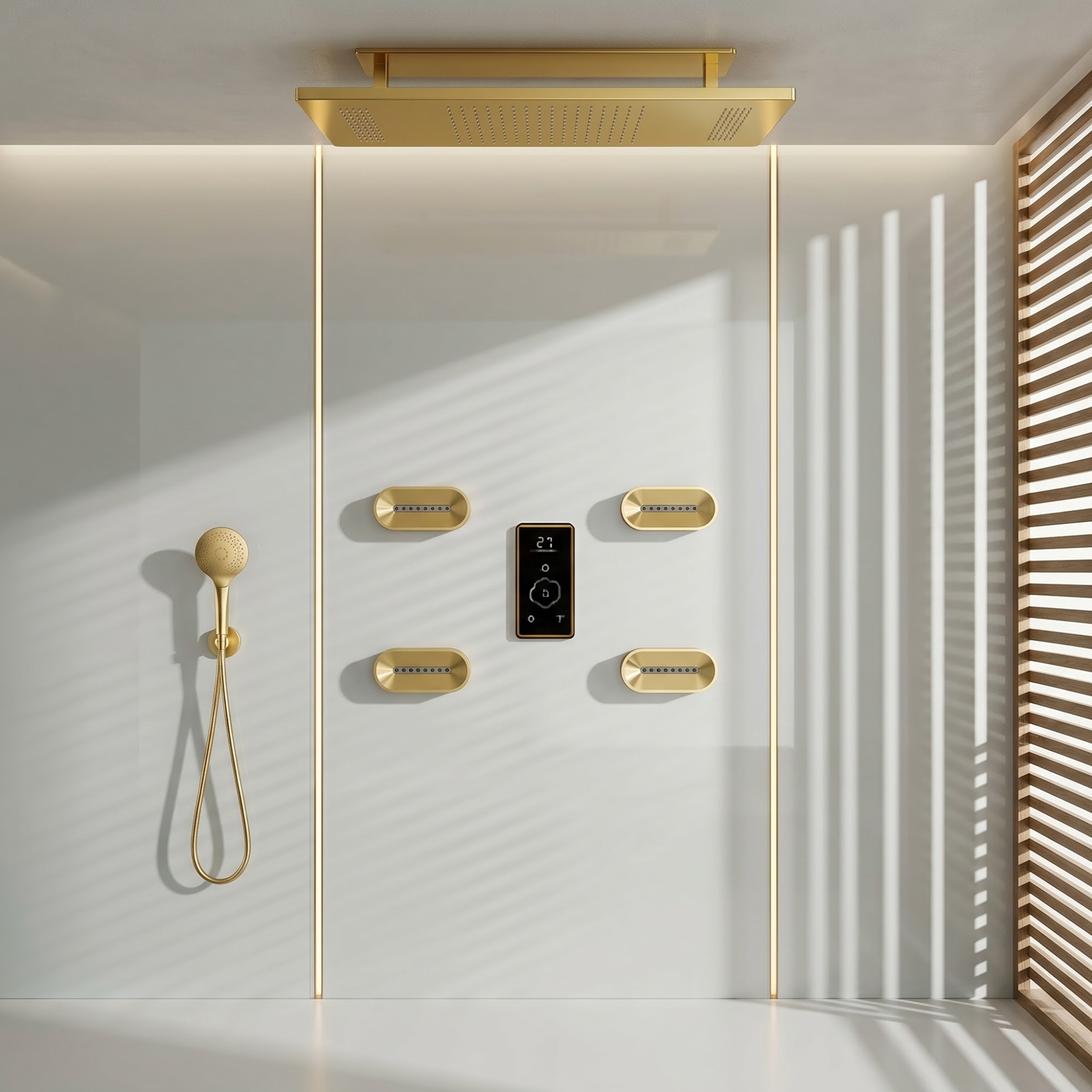
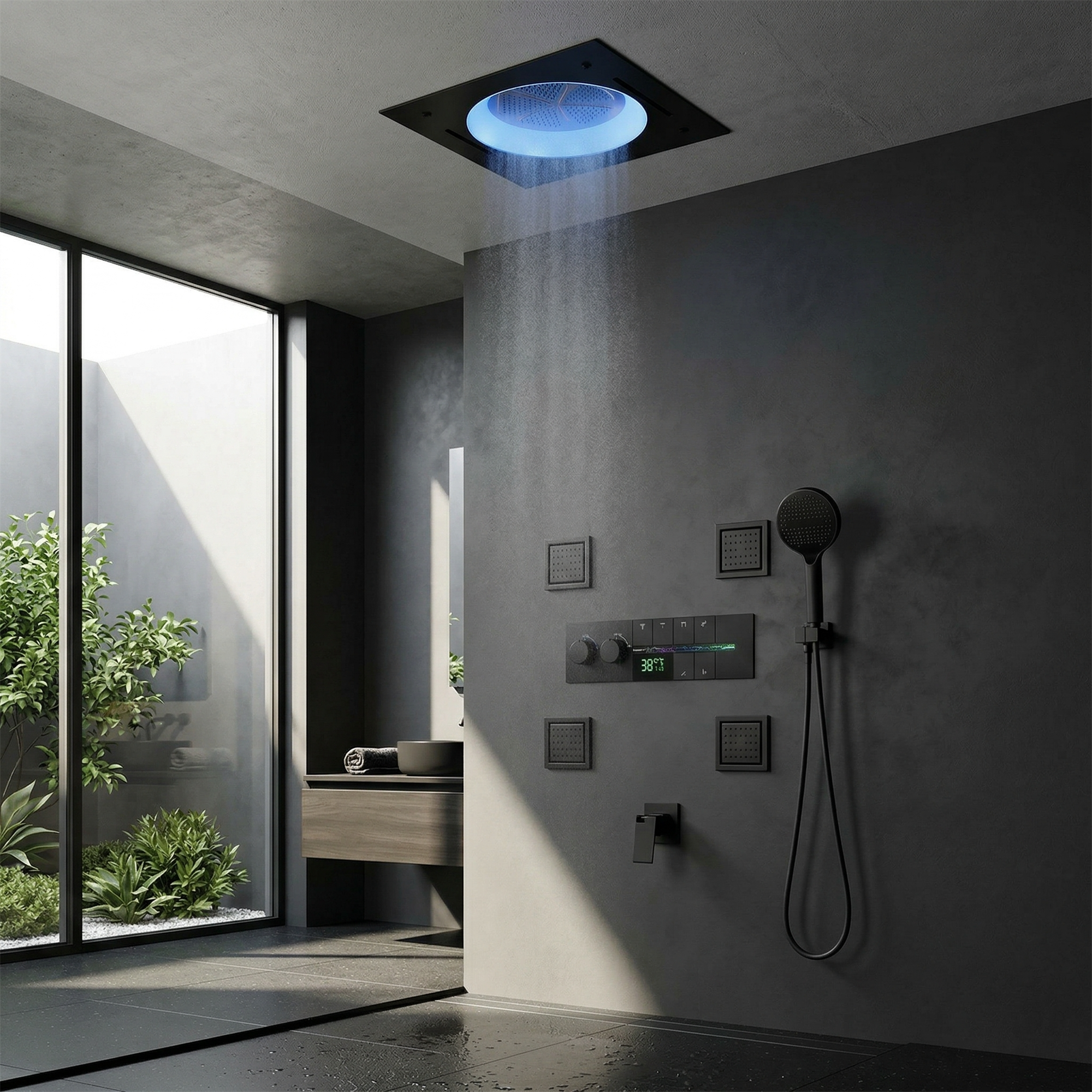
Smart shower system configuration with multiple outlets
Record every outlet and its operating logic in the guestroom fixture schedule.
Alternative digital shower system configuration
Alternate outlet configurations can create different hydraulic and valve-capacity requirements.
Multi outlet shower system model for hospitality specification
Multi outlet shower system model for hospitality.
Commissioning

Commission the Shower Before Repeating It Across the Property

Smart showers add another layer to guestroom commissioning. Testing should include the plumbing system, digital controls and any optional network or room-system integration rather than checking only whether water turns on.

Verify hot and cold supplies.
Confirm valve orientation and outlet assignment.
Test all permitted outlet combinations.
Check temperature stability.
Verify controller response and labeling.
Test power-loss behavior.
Confirm any presets stored correctly.
Test connectivity where included.
Confirm service panels remain accessible.
Record software or firmware version where relevant.
Give facility staff troubleshooting documentation.
Retain final settings in the operations manual.
Accessibility

Smart Controls Still Need an Accessible Shower Layout

Digital controls do not override accessibility requirements. In accessible hotel guestrooms, shower type, controls, grab bars, seats, hand-held spray units, clearances and transfer or roll-in configurations must still coordinate with the applicable accessibility requirements.

Control Reach Position smart controllers within the applicable accessible reach and shower-control zones.
Hand Shower Coordinate the hand-held unit with the accessible shower configuration.
Grab Bars Digital screens and outlet controls must not interfere with required grab bars.
Seat Use Required functions should remain usable from the intended shower seat position.
Interface Simplicity Technology should not introduce unnecessary operating complexity for guests.
Project Review Verify the exact governing standard and jurisdiction for the property.
Operations + Lifecycle

The Best Smart Shower Platform Must Still Be Serviceable in Ten Years

Hotel technology ages differently from tile, stone and conventional plumbing. A shower valve may remain serviceable for many years while the controller, network standard, display or cloud service around it changes much faster. This mismatch should be addressed during specification.

Owners should understand which components are electronic, which can be replaced independently and whether a failed controller requires replacement of otherwise functional concealed plumbing. Service panels should remain accessible without removing finished stone or rebuilding waterproofed walls.

Platform selection should also consider replacement-parts distribution. Hotels operate continuously, and taking guestrooms out of inventory while a proprietary controller is sourced can create costs far beyond the price of the component itself. For large portfolios, owners may choose to stock critical controls, valves or power components.

Software support matters as well. Connected products should have a clear owner for account administration, updates and end-of-life decisions. A digital platform that cannot be safely supported later should have a practical path back to reliable local shower operation.

AEC Submittal Review

Smart Shower Specification Checklist

Exact brand and platform.
Digital or mechanical valve model.
Number and type of outlets.
Individual outlet flow rates.
Permitted simultaneous operation.
Operating pressure requirements.
Hot-water demand.
Power requirements.
Controller mounting location.
Network or cloud dependency.
Offline operating capability.
Software or firmware support model.
Administrative credential ownership.
Service-access location.
Replacement-parts availability.
Commissioning procedure.
Accessibility coordination.
Housekeeping and finish-care guidance.
Government & Technical References

Independent Guidance for Smart Shower Projects

A connected shower touches several disciplines. Water efficiency, accessibility and cybersecurity should be reviewed alongside manufacturer documentation rather than treated as separate afterthoughts.


U.S. EPA WaterSense — Showerheads Official water-efficiency and showerhead performance guidance.
EPA WaterSense — Commercial Buildings Water-management resources for hotels and other commercial buildings.
EPA WaterSense — Best Management Practices Facility guidance covering water management, metering, leak detection and operational efficiency.
U.S. Access Board — Bathing Rooms Accessibility guidance for shower compartments, controls, clearances and other bathing-room elements.
NIST IR 8259 Rev. 1 — IoT Cybersecurity Current NIST foundational cybersecurity guidance relevant when products incorporate connected or IoT functionality.
NIST IR 8259A — IoT Device Cybersecurity Baseline A technical capability baseline useful when evaluating connected-device cybersecurity requirements.
HospitalityBath Research

Continue the Hotel Shower Specification Research

Smart Shower FAQ

Questions Hotel Owners, Architects & Engineers Ask

What are the best smart shower brands for hotels?
Common platforms considered for hospitality and premium multi-residential projects include FontanaShowers, Kohler, GROHE, Moen, Hansgrohe, Delta and BathSelect. The strongest choice depends on outlet requirements, control strategy, serviceability, connectivity and lifecycle support.
Are smart showers worth installing in every hotel room?
Usually not. Full digital or connected platforms can make more sense in flagship suites, wellness rooms and premium residential-style units, while simpler standardized systems can reduce lifecycle complexity in typical guestrooms.
Does a smart shower need Wi-Fi?
Not every digital shower requires internet connectivity. The project team should distinguish between local digital control, local-network operation and cloud-dependent features before specifying the platform.
What happens if a smart shower loses internet access?
That depends on the platform. Hospitality teams should verify that basic shower operation remains available without optional cloud or app functionality wherever possible.
Do smart showers use less water?
Not automatically. Water demand still depends on outlet flow rates, simultaneous operation and duration of use. Digital control should not be treated as proof of water efficiency.
What should be included in smart shower commissioning?
Commissioning should verify plumbing connections, outlet assignments, valve response, temperature stability, controller operation, presets, power-loss behavior, service access and any network functionality included in the project.
Are smart showers a cybersecurity concern?
Connected shower products should be reviewed like other IoT devices. Hotels should understand authentication, credentials, updates, network dependency, manufacturer support, data handling and end-of-life procedures.
Which smart shower type is best for luxury hotel suites?
Multi-outlet digital systems can work well where the room concept justifies premium rainfall, hand shower, body outlet or wellness functions. The concealed valve capacity and hot-water demand still need engineering review.
Should hotel smart showers have a mechanical fallback?
The available fallback strategy depends on the product. Owners should document how basic shower operation is restored or maintained during controller, power, network or software failures.
What matters most when selecting a smart shower platform?
Prioritize intuitive guest operation, reliable valves, realistic hydraulic demand, service access, replacement-parts availability, support lifecycle, power strategy and any required network or cybersecurity controls.
Hospitality Specification Principle

Choose the Platform for the Building, Not the Feature List

The best smart shower brand is not necessarily the platform with the most apps, presets or outlets. In hospitality, the strongest system is one that guests understand immediately, engineers can commission consistently, facilities teams can repair without destructive work, and owners can support across the useful life of the bathroom. Treat digital controls, plumbing, power, connectivity and maintenance as one coordinated specification.

Imani Greer

Imani Greer is a staff writer and editorial team member at hospitalitybath.com, covering hospitality faucets, sinks, accessories, materials, and maintenance considerations. Imani's articles are researched and developed using manufacturer resources, published guidance, product data, and attributable references.