
Vandal-Resistant Touchless Faucet Design for Stadium Restrooms
For stadiums and arenas, a vandal-resistant touchless faucet is more than a durable finish. The specification must control the risks of impact, twisting, tampering, water exposure, inaccessible electronics and repeated high-volume operation. This AEC guide explains how better construction, mounting and maintenance access can reduce damage exposure, unexpected closures and premature replacement.

Why stadium faucets face unusual damage and downtime risk
In a public stadium, restroom demand comes in waves. A bank of sinks can be lightly used during a match and then experience near-continuous use at halftime, during intermission or immediately after an event. Each user cycle exposes a faucet to contact, cleaning, splash, pressure variation and the possibility of accidental or deliberate force. Small weaknesses become expensive when the same specification is repeated throughout a venue.
Read MoreShow Less
Vandal resistance therefore belongs in the architecture, plumbing and facilities discussion from the outset. A durable metal faucet body alone is not sufficient if the deck fitting loosens, a sensor window is easily damaged, a controller is exposed or the solenoid can only be serviced after dismantling the counter. The strongest detail considers the full assembly, the room geometry and the facility team’s ability to repair one station while the remaining stations stay open.
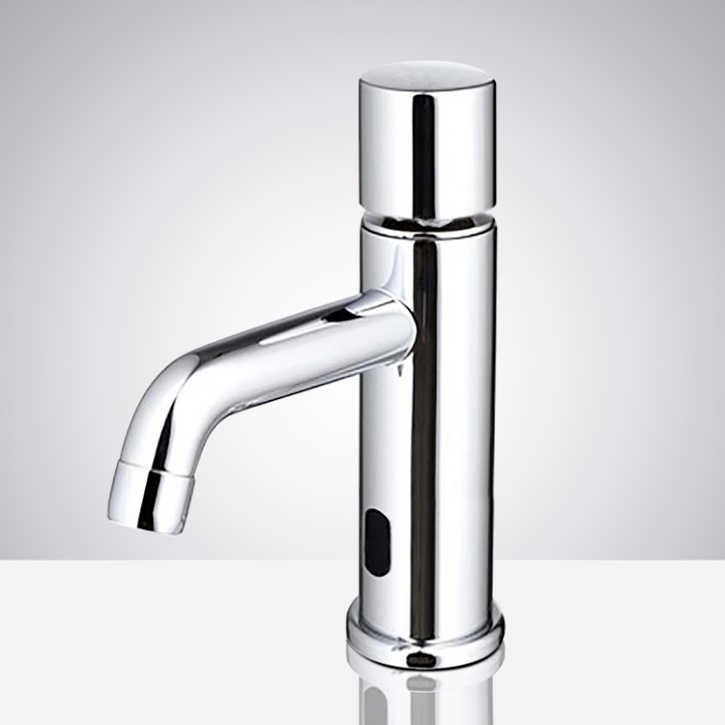
Durable construction begins with the faucet body
Solid brass and suitably specified stainless steel are common candidates for commercial touchless faucets because their mechanical strength, corrosion behavior and finish compatibility can support repeated public use. Review the actual alloy, wall thickness, spout joint design and connection method rather than assuming every metal-looking faucet has comparable strength. A smooth, simple body with fewer exposed seams is generally easier to clean and offers fewer gripping points.
Read MoreShow Less
Durability is not established by the label “commercial grade” alone. Request a manufacturer cut sheet identifying the body and spout materials, connection details, finish construction, maximum working pressure and applicable test standards. Confirm whether the sensor lens is flush, protected or replaceable. The spout outlet should be accessible to authorized staff but not easily removed by casual users.
For plated fixtures, confirm the manufacturer’s cleaning-chemical limitations, warranty conditions and instructions for aggressive or abrasive cleaning. A high-quality finish can remain visually consistent longer when custodial procedures match the manufacturer’s recommendations. The purpose is to reduce avoidable damage, not to claim that a particular finish is scratchproof or immune to misuse.

Secure deck and wall mounting reduce tampering opportunities
Stadium washrooms typically favor repeated deck-mounted positions or coordinated wall-mounted spouts over shared basins. In either approach, the fixing method is central to vandal resistance. A rigid base, appropriate counter backing, secure mounting hardware and protected supply connections reduce the risk of looseness after repeated contact. Wall fixtures require sound substrate, coordinated blocking and serviceable rough-in assemblies.
Read MoreShow Less
At deck installations, specify sufficient countertop reinforcement and access clearance for the anchor hardware, seals and hoses. At wall installations, coordinate structural backing, escutcheon coverage, waterproofing and concealed plumbing. Where the manufacturer offers tamper-resistant fasteners, identify the correct service tool and keep it in the facilities inventory. Do not assume a wall-mounted unit is automatically vandal-resistant; a poorly supported spout can still be twisted or dislodged.
During mockup review, verify spout reach, basin alignment, clearances, splash patterns and physical access beneath the counter or behind an approved access panel. A detail that is difficult to tighten or inspect on opening day will be even more difficult to repair during an event.

Sensor stability is part of vandal-resistant performance
Contact-free operation removes the handle as an everyday manipulation point, but the faucet still needs accurate detection, predictable shutoff and a resilient sensor window. Excessively broad detection may create unwanted activations from nearby movement; weak detection can lead to guests striking, waving at or repeatedly touching the fixture. Both behaviors increase complaints and avoidable maintenance work.
Read MoreShow Less
Specify model-supported adjustment and commissioning procedures for the installed basin, countertop reflectivity, lighting and neighboring faucets. Test several user approaches, simultaneous operation and wet-basin conditions. Confirm the permitted maximum run time and reset sequence. Sensor electronics, wiring and solenoids should be located away from uncontrolled public access and foreseeable splash, while remaining reachable from a locked maintenance area.
Infrared and time-of-flight sensors should not be treated as interchangeable. Either technology must be evaluated by its documented range, environmental limitations and site acceptance testing. An appealing sensor specification only becomes a reliable public wash station after it is commissioned in its final architectural setting.

Protect service components without creating a repair trap
A properly arranged touchless fixture places control boxes, shutoff valves, filters, batteries, electrical connectors and solenoids outside the normal guest reach. However, hiding equipment behind fixed millwork can extend a routine repair into a prolonged restroom closure. Accessible, lockable service panels and identified isolation points are therefore central to practical vandal resistance.
Read MoreShow Less
MEP drawings should show the controller position, electrical service clearance, valve replacement path, battery change location and the shutoff that serves the individual station or manageable group. Coordinate the location of the equipment with sink support brackets, trap arms, waste piping and accessible-knee-clearance requirements. Facilities staff should be able to isolate a failed faucet quickly while the rest of the sink bank continues operating.
When evaluating a proprietary controller or solenoid, obtain the model-specific replacement procedure and stocked-parts strategy. Standardizing approved faucet families can reduce the number of emergency service kits, staff training variations and incompatible components carried for the building.
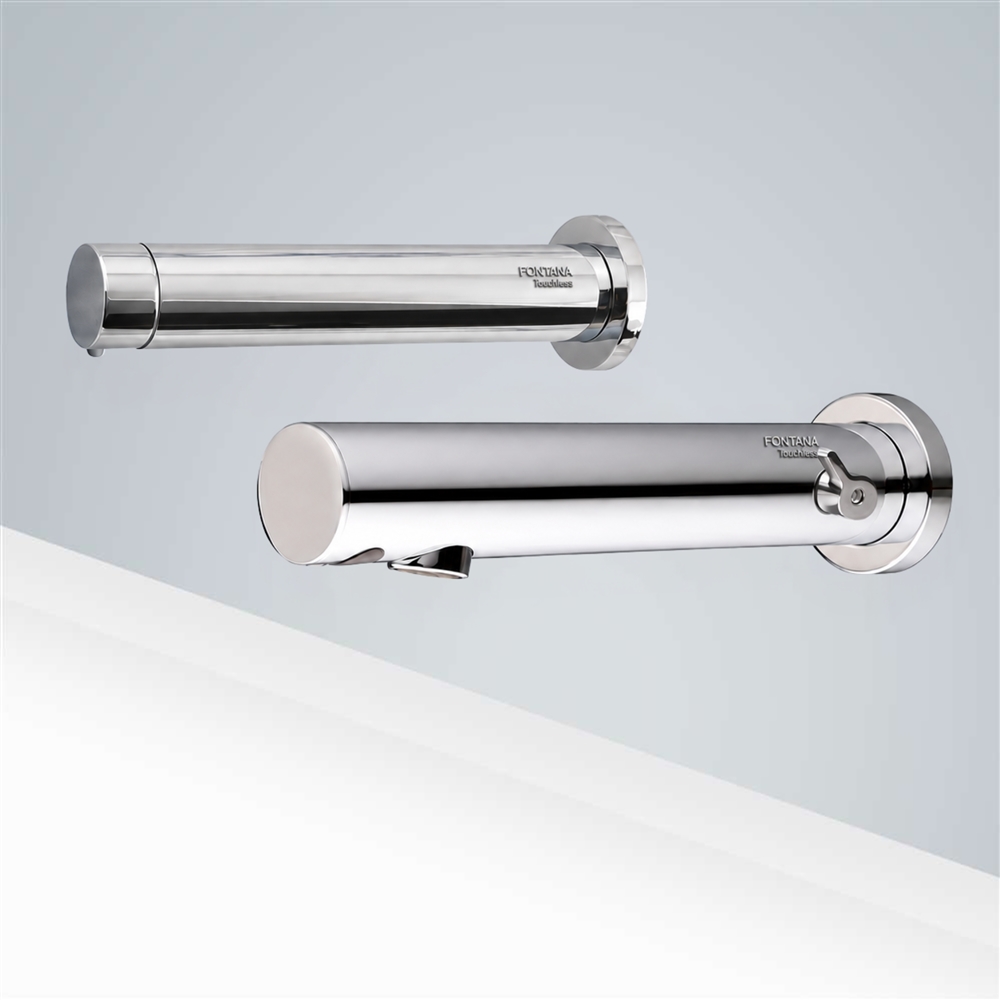
Pressure control, flow and temperature affect fixture life
Commercial sensor faucets must operate within the pressure range and water conditions specified for the actual model. Stadium buildings can see rapid changes in simultaneous lavatory demand, so distribution sizing, pressure management and local filtration affect both activation consistency and component wear. Strainers help reduce debris reaching solenoid seats; isolation points support rapid diagnosis.
Read MoreShow Less
Select the applicable lavatory discharge rate under local plumbing and conservation requirements. A 0.5 gpm flow rate is common in commercial applications, but a numerical target must not be substituted for the project code or the approved product listing. Where hot or mixed water is supplied, coordinate temperature-limiting protection such as ASSE 1070 equipment when required by the design and applicable codes. Verify pipe and fitting materials, pressure limits and any specific water-quality restrictions.
Sensor shutoff can reduce unnecessary water run time, but the result depends on the final flow rate, sensing behavior and user patterns. Avoid unsupported savings percentages. Water-efficiency calculations should be tied to documented product data and a project-specific operating assumption.
Vandal-resistant faucet specification matrix
Use performance submittals and mockups to verify each criterion. No single product photograph establishes a vandal-resistance classification.
| Design item | Specify and coordinate | Field acceptance / owner benefit |
|---|---|---|
| Body and spout | Documented brass or stainless construction; supported joints; smooth, wipe-clean geometry. | Inspect rigidity, finish consistency and the complete assembly after installation. |
| Mounting security | Reinforced deck or wall backing; secure fixing method; protected connection points. | Check movement, torque per instructions and access to authorized fasteners. |
| Sensor protection | Durable sensor window; documented activation range; tamper-aware placement. | Test user approaches, false triggers, adjacent fixtures and reliable shutoff. |
| Electronics and power | Model-specific AC, DC or approved hybrid strategy; protected controller location. | Demonstrate access for battery, transformer, wiring and diagnostic service. |
| Waterway and controls | Documented working pressure; filtration; accessible solenoid; appropriate flow and mixing. | Verify sustained delivery under representative simultaneous use. |
| Repair continuity | Accessible isolation valves, spare parts and service space. | Demonstrate replacement without taking an entire restroom bank offline. |
| Compliance review | Check ASME A112.18.1/CSA B125.1, NSF/ANSI/CAN 61 and 372, ADA 2010/ICC A117.1 and local requirements as applicable. | Keep model-specific third-party listings and accessibility coordination in the submittal record. |
Exact test certification, water efficiency, accessibility and vandal-resistance claims are product-specific and require documentation from the submitted manufacturer.

Lifecycle cost is measured in interventions, not only purchases
The lowest initial faucet price is not necessarily the lowest facility cost. Owners should compare acquisition with expected replacement assemblies, service labor, spare components, cleaning effort, downtime and the cost of closing adjacent stations. High-volume restrooms magnify service events because a single failed sink may redirect guests into already crowded areas.
Read MoreShow Less
A practical total-cost model is: acquisition and installation + scheduled maintenance + unscheduled repair labor + replacement parts + business disruption + water and energy. Use the same evaluation period and usage assumptions for each candidate. Request warranty exclusions, replacement-part lead times, permitted repairs and evidence of comparable commercial duty. Do not treat a vendor marketing statement as a measured reduction in maintenance calls.
Consider the difference between replacing a sensor cartridge from a protected service panel and removing a finished counter to reach a concealed controller. Even when the component prices are similar, the labor and access impact can be very different. A maintainable fixture specification protects the opening-day investment by reducing the scope of future intervention.
Commercial faucet forms and mounting examples
Large, uncropped manufacturer-hosted photos illustrate design choices; model-specific vandal resistance must be confirmed from technical documentation.

Compact deck-mounted sensor faucet
A streamlined spout with a visible sensor field and compact mounting footprint.
View fixture reference →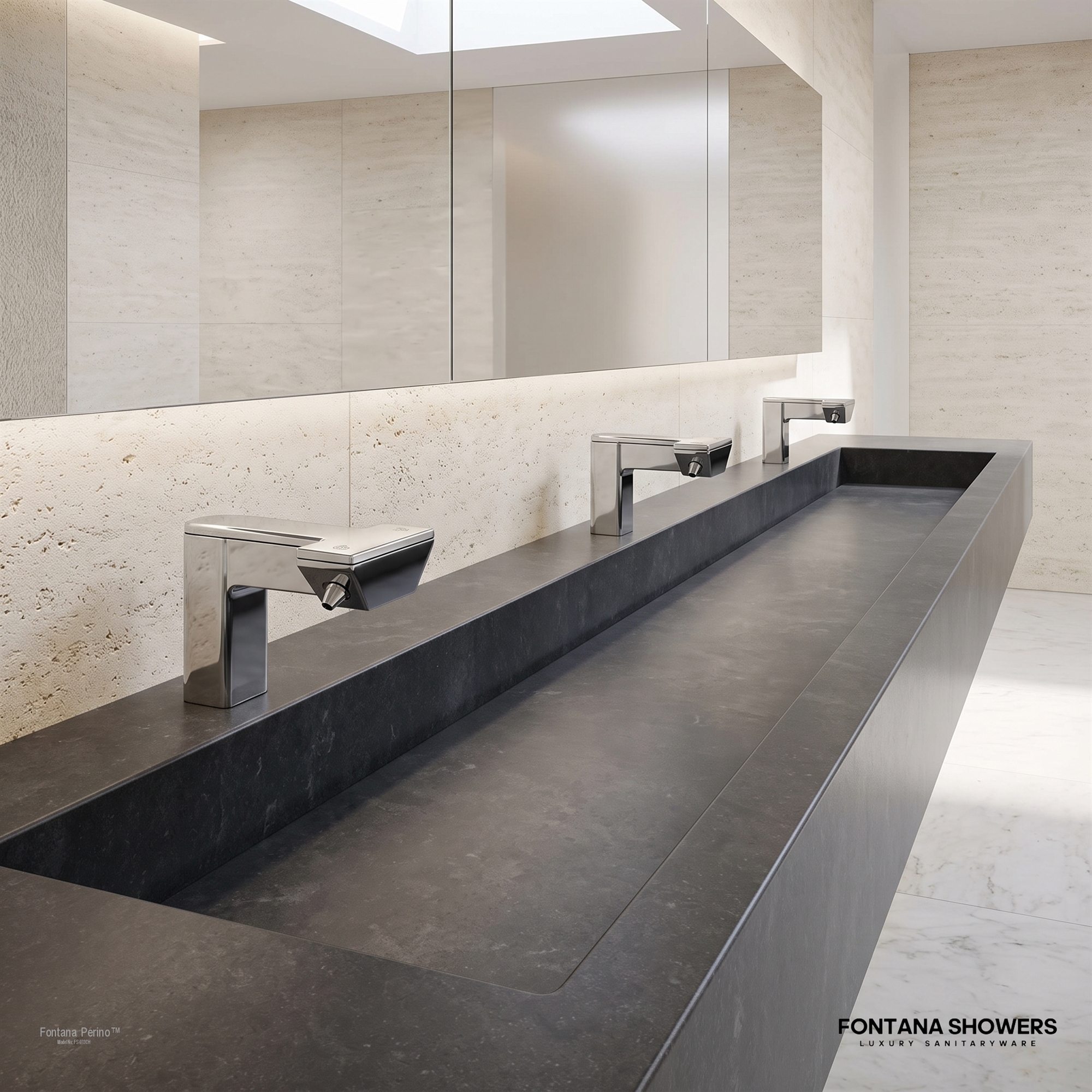
Repeated multi-station washstation layout
Long counters require protected supply zones, usable spacing and coordinated cleaning access.
View fixture reference →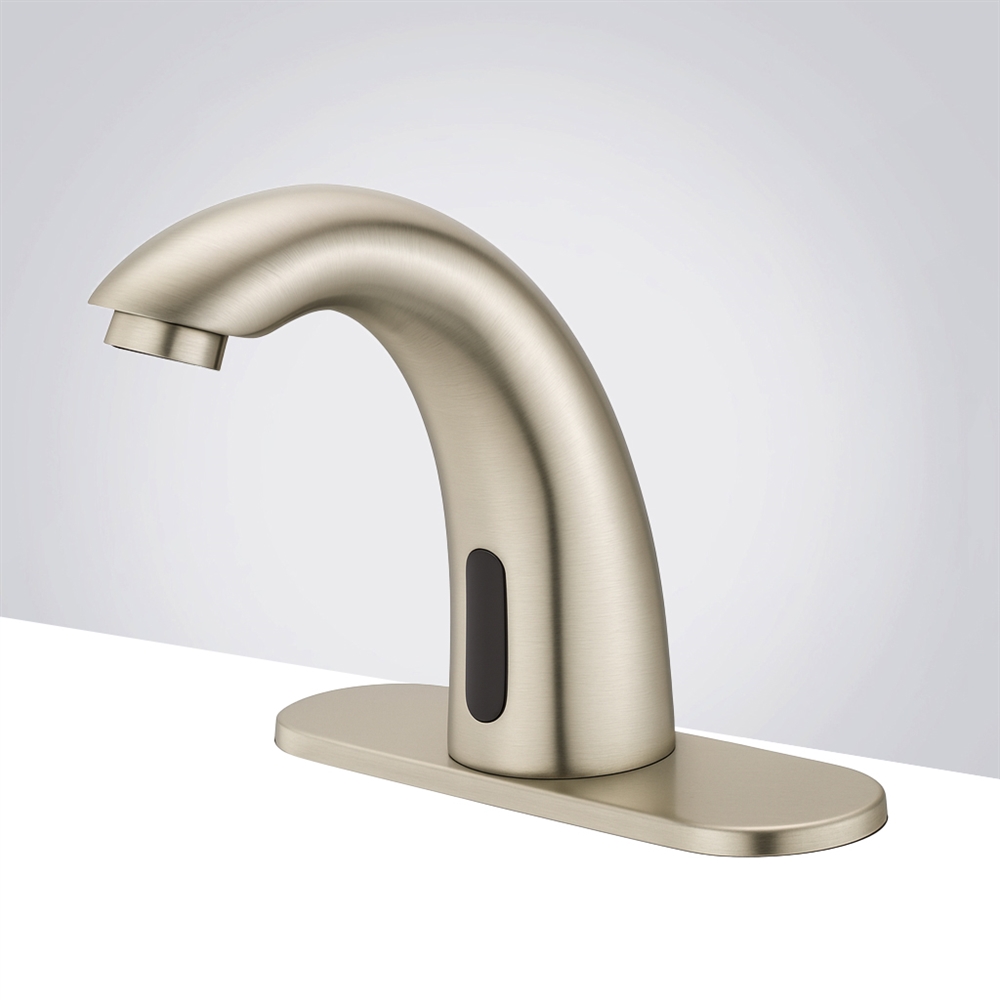
Brushed nickel automatic sensor faucet
Rounded geometry and easy-to-wipe surfaces are useful topics for finish and cleaning review.
View fixture reference →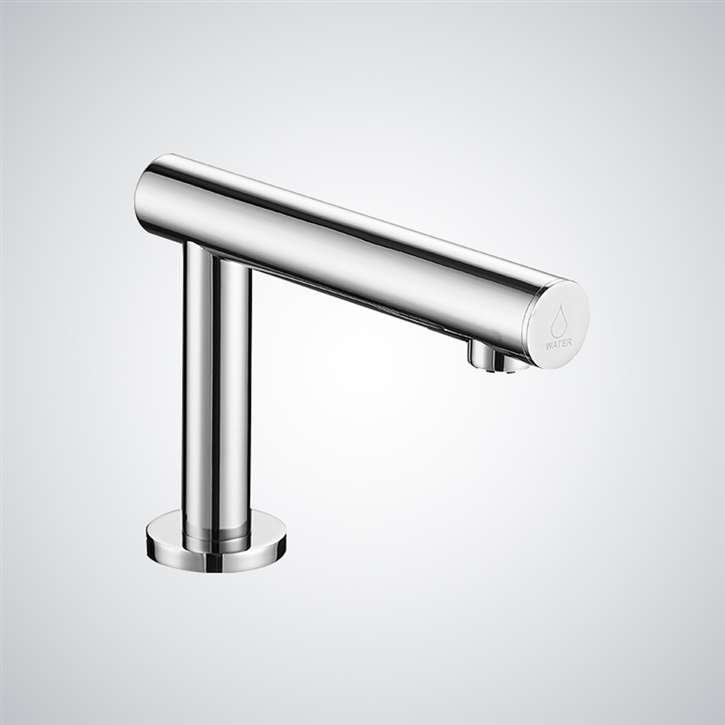
Chrome cylindrical sensor faucet
A compact spout profile helps teams compare basin alignment and protected activation zones.
View fixture reference →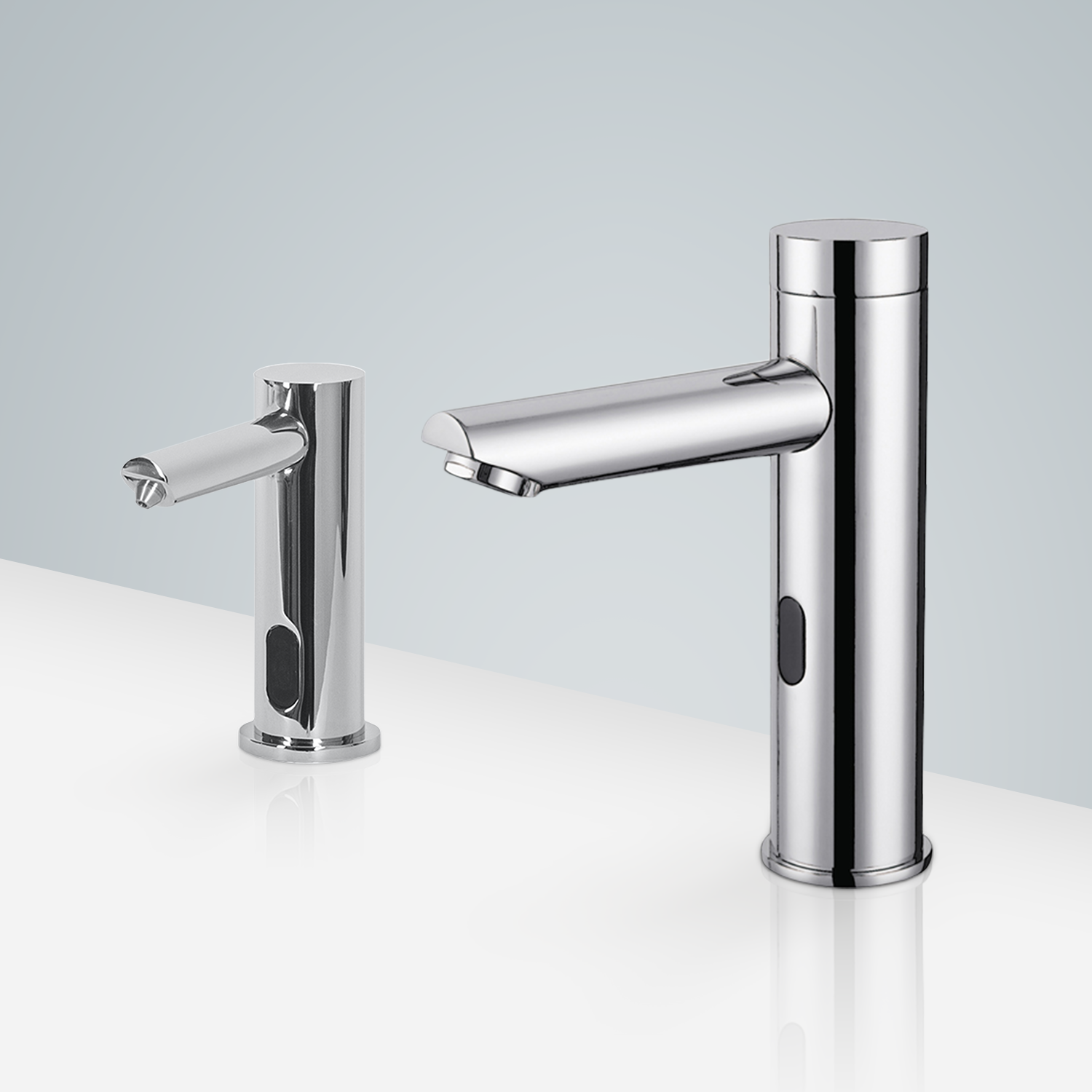
Automatic faucet and soap dispenser pairing
Coordinated water and soap helps make the wash sequence intuitive during event surges.
View fixture reference →
Wall-mounted faucet bank
Wall-mounted fixtures support a clean counter when the rough-in and service openings are sound.
View fixture reference →Large-format visual references for stadium planning
These views connect fixture selection to the surrounding room: sink geometry, mirror location, crowd circulation and public-use conditions.


How to reduce damage and service interruptions
A durable design should be handed to the facility team as a maintainable, testable system rather than a collection of isolated faucets.
Before procurement
Review the exact model, bill of materials, product cut sheet, certified performance claims, service tools, permitted cleaning products and stocked replacement components. Confirm that the named faucet configuration actually supports the proposed mounting and power arrangement.
During installation
Require a representative mockup. Check structural backing, secure connections, deck penetration, backsplash waterproofing, protected controller location, individual isolation and adequate access without compromising accessibility.
At commissioning
Test repeated activation, adjacent-station operation, wet sink conditions, expected pressure variation, valve shutoff, battery or power restoration and response from normal hand positions. Record approved sensor settings.
During ownership
Create a routine for cleaning approved finishes, checking looseness, inspecting strainers, monitoring battery condition and replacing damaged outlets or lenses. Review service events to identify repeated fixture or installation weaknesses.
Stadium and entertainment-venue references
Manufacturer-published project pages provide useful planning context; independently confirm project procurement and installed product details before making project-specific claims.

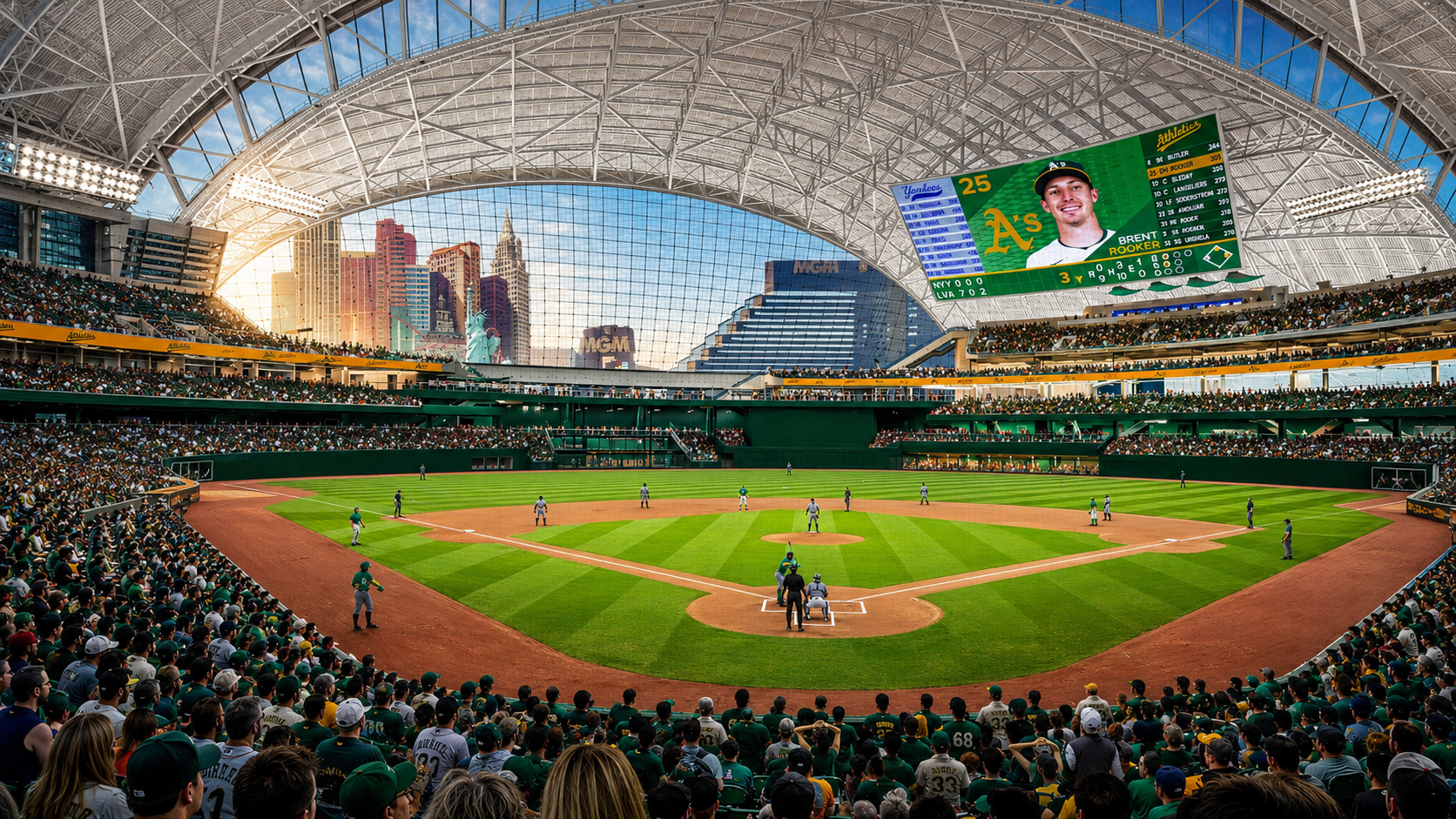
Las Vegas MLB Stadium – Touchless Faucet Planning
A stadium-scale reference for concentrated crowd use, finish coordination and service planning.
Explore venue reference →
UNL Memorial Stadium – Chrome Touchless Faucets
A university stadium reference focused on event-driven washroom demand and repeated fixture banks.
Explore venue reference →
Virginia Architectural Faucets – Wolf Trap
A performing-arts venue reference for long-term operations and public-facing fixture integration.
Explore venue reference →
Hershey Theatre – Commercial Touchless Applications
A theater reference highlighting intermission traffic and access for fixture servicing.
Explore venue reference →Vandal-resistant sensor faucets: common AEC questions
Does a touchless faucet automatically qualify as vandal-resistant?
No. Touchless activation removes conventional user-operated handles but does not prove the body, outlet, sensor window, anchors, hardware or controls can withstand deliberate abuse. Review manufacturer documentation and the completed installation.
Should stadium restrooms favor wall-mounted or deck-mounted faucets?
Either can perform well. Wall mounting can keep counter surfaces cleaner, while deck mounting may simplify replacement where access is generous. Choose based on substrate, basin geometry, reinforcement, concealed-component access and maintainability.
Which standards should be checked during specification?
Check the applicable plumbing code and the model’s relevant ASME A112.18.1/CSA B125.1, NSF/ANSI/CAN 61 and 372 documentation, plus ADA 2010 and ICC A117.1 coordination. WaterSense and other marks apply only to qualifying products and uses, not to every automatic faucet.
How does better service access lower replacement cost?
A technician can isolate the affected station and change a filter, valve or controller without dismantling countertops or closing an entire washroom. The actual savings depend on the failure mode, component availability, staffing and facility conditions.
Related stadium restroom engineering resources
Grouped by topic to keep this page readable. Open a category to see the full set of related titles.
For stadium fixture selection, start with the Fontana large-venue systems portfolio and the stadium restroom planning resource. The additional articles below cover procurement, MEP coordination, uptime, sensing and lifecycle maintenance.