Touchless vs Manual Hotel Bathroom Faucets: Which Is Better?
For most hotels, touchless faucets make more sense in public restrooms, while manual faucets usually remain the better fit for guestrooms.
Touchless faucets reduce physical contact, automatically control activation and can support low-flow public-washroom strategies, but they also introduce sensors, power supplies and commissioning requirements. Manual faucets give guests familiar control and generally simplify service in private rooms. The best hotel faucet therefore depends on location, traffic, basin geometry, maintenance strategy, water-use targets and the level of guest experience being designed.
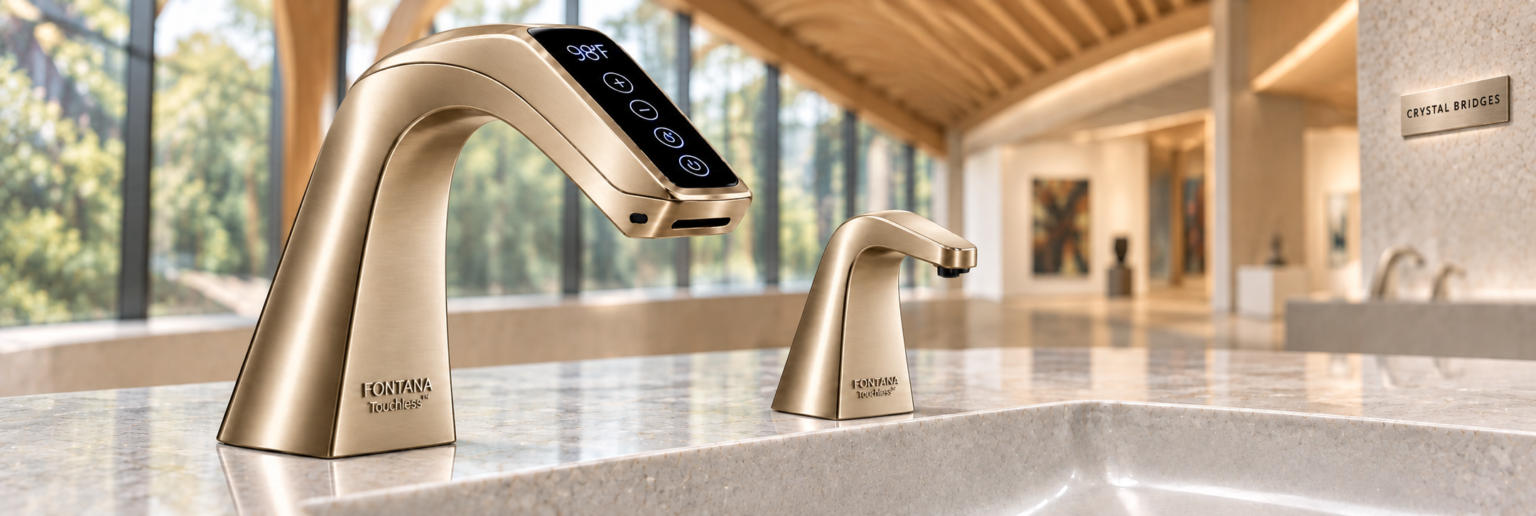
Best where traffic, controlled activation, reduced contact and commercial-service planning are priorities.
Best where intuitive guest control, decorative finish selection and straightforward long-term servicing matter most.
Touchless vs Manual Hotel Bathroom Faucets: Key Differences
The specification decision is not simply electronic versus mechanical. Hotel teams should compare how each faucet type performs within its actual room category, operating environment and maintenance program.
Sensor vs Mechanical Control
Touchless faucets use automatic sensing to start and stop flow. Manual faucets require handle or lever operation but give guests direct temperature and flow control.
Electronics Add Infrastructure
Sensor faucets may rely on batteries, mains power or another control architecture. Manual faucets normally avoid electronic commissioning and power-maintenance requirements.
Automatic Shutoff Changes Use
Touchless fixtures can reduce unnecessary run time by stopping flow automatically when hands leave the detection zone. Manual use depends more heavily on user behavior.
Maintenance Paths Differ
Manual faucets usually center service around cartridges, aerators and seals. Sensor systems add electronics, power and detection components to the maintenance strategy.
Familiarity Still Matters
Guestroom occupants generally understand a manual faucet immediately. Public-restroom users are increasingly accustomed to automatic activation where handwashing duration is brief.
Both Require Geometry Review
Faucet type does not eliminate the need to verify spout projection, outlet height, basin depth and water-impact location to control splash.
Touchless vs Manual Faucet Comparison for Hotels
| Specification Factor | Touchless Faucet | Manual Faucet | Hospitality Implication |
|---|---|---|---|
| Typical Location | Lobby, restaurant, ballroom, conference restroom | Guestroom, suite, private vanity | Match faucet architecture to traffic and room type |
| Activation | Automatic sensor | Lever or handle | Touchless reduces physical interaction |
| Power | Battery or electrical system | Normally none | Sensor systems require maintenance planning |
| Water Control | Automatic shutoff | User-controlled shutoff | Touchless can limit unnecessary run time |
| Guest Familiarity | High in commercial washrooms | Very high in guestrooms | Manual remains intuitive for private use |
| Service Components | Sensor + power + valve + aerator | Cartridge + seals + aerator | Service strategy changes by faucet architecture |
| Finish / Design Range | Increasing but often commercial-oriented | Very broad decorative range | Manual may offer more luxury guestroom options |
| Best Overall Hotel Use | High-traffic public spaces | Private guestrooms and suites | Most hotels benefit from using both types strategically |
Five Hotel Bathroom Faucets Compared
These five products illustrate different hospitality strategies: commercial touchless operation, integrated sensing, premium manual control, decorative luxury and renovation-oriented serviceability.
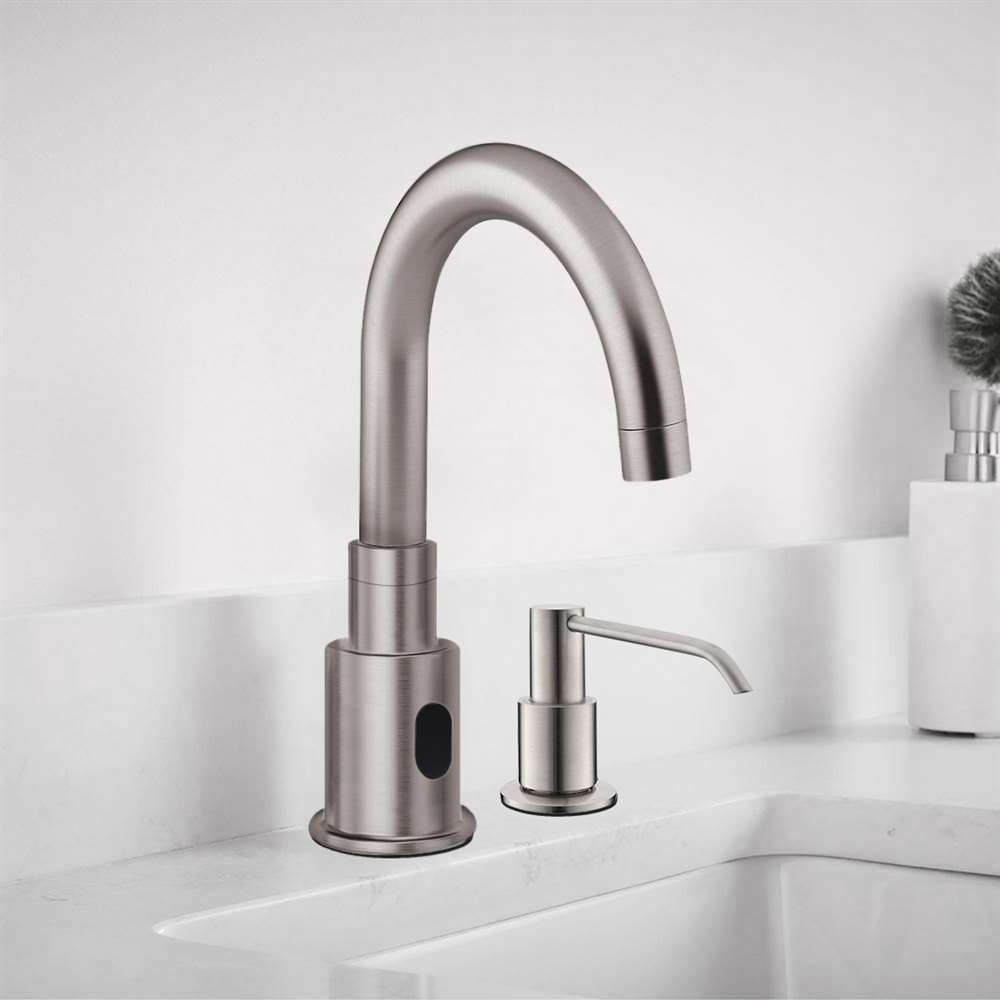
Fontana Orlyth™ Touchless Sensor Faucet
A brass single-hole infrared faucet positioned for commercial and high-traffic restroom applications where hands-free activation and coordinated sensor operation are priorities.

Clean IR Touchless Bathroom Faucet
A low-flow battery-operated sensor faucet with controls integrated into the faucet body, reducing the need for a separate under-counter control assembly.

Purist® Widespread Bathroom Faucet
A manual widespread faucet combining straightforward mechanical operation with a documented 1.2-gpm flow rate and ceramic disc valve architecture.
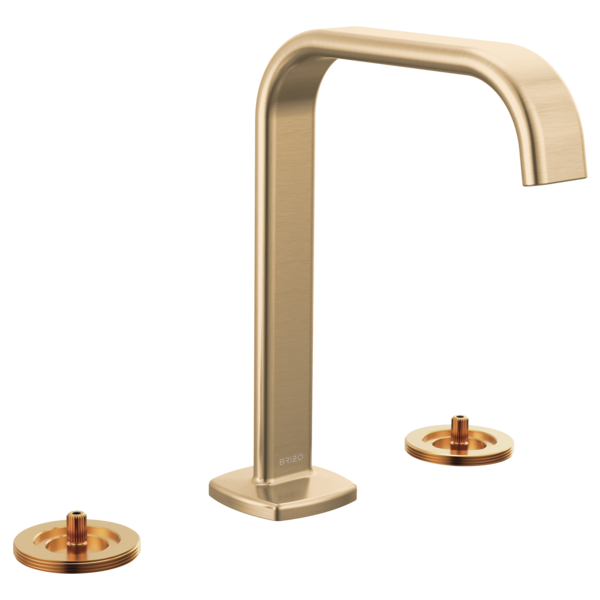
Allaria® Widespread Lavatory Faucet
A luxury manual faucet with a ribbon-style spout and 1.2-gpm laminar configuration, designed more around premium guestroom aesthetics than high-traffic public restroom operation.
Colinet Two-Handle High-Arc Faucet
This manual faucet uses Moen’s M-PACT common valve architecture, which can support future trim changes without replacing the underlying valve body.
Why Hotels Often Need Both Touchless and Manual Faucets
The most effective hospitality specification is often not an either-or decision. A hotel may use touchless faucets throughout its lobby, restaurant, ballroom and conference restrooms while using manual faucets in guestrooms and suites. The two fixture types serve different operating environments.
Public restrooms experience concentrated peaks of short-duration use. Automatic activation can reduce unnecessary faucet run time and eliminates the need for users to manipulate handles during handwashing. However, the sensor faucet must still be coordinated with basin depth, spout projection, detection zone, power supply and service access. An automatic faucet that splashes outside a shallow basin or requires destructive access to reach a control component is not a successful specification.
Guestrooms operate differently. A guest may wash hands, shave, fill a container or intentionally adjust water temperature and duration. Familiar manual controls provide immediate feedback without introducing electronic behavior that may vary from the guest’s expectation. Decorative guestroom faucets also offer a broader range of handle styles, spout geometries and coordinated finishes for shower trim, accessories and other bathroom fittings.
Lifecycle planning should therefore consider more than first cost. For a touchless faucet, the project team should understand the power source, sensing architecture, valve access and replacement strategy. For a manual faucet, cartridge durability, handle components, aerator access and finish consistency become important. In both cases, basin compatibility and current manufacturer documentation should be checked before large-scale procurement.
Hotel Faucet Specification Checklist
- Room type: identify guestroom, suite, lobby, restaurant, ballroom or conference use.
- Flow rate: document actual model flow rather than using generic water-saving claims.
- Basin geometry: verify spout reach, outlet height, bowl depth and expected water impact.
- Power: for touchless systems, document batteries, mains power or other required architecture.
- Sensor commissioning: confirm activation range and expected behavior in the installed basin.
- Valve access: ensure cartridges, solenoids, filters and control components can be serviced.
- Finish performance: consider cleaning chemistry, water spotting and future replacement consistency.
- Temperature strategy: establish how mixed water is controlled for both manual and automatic fixtures.
- Replacement parts: verify availability before standardizing a product across large room inventories.
- Mock-up: test faucet-to-basin interaction before property-wide procurement.
Professional References for Hotel Faucet Specification
Specification Note
Exact faucet flow, power configuration, certification, finish, accessibility characteristics and installation requirements can vary by model and market. Verify current manufacturer documentation and applicable project requirements before procurement.