You are currently viewing Luxury Hospitality Smart Mirrors: Elevating Guest Experience Through Intelligent Design

Luxury Hospitality Smart Mirrors: Elevating Guest Experience Through Intelligent Design

HospitalityBath · Smart Mirror Specification

Luxury Hotel Smart Mirrors: AEC Specification Guide

Luxury hotel smart mirrors combine illuminated grooming light, mirror demisting and optional digital convenience features into one guest-facing bathroom element. For hospitality projects, the best smart mirror is not simply the model with the most features; it is the one that coordinates correctly with vanity height, lighting design, electrical rough-in, accessibility, cleaning procedures and long-term replacement requirements.

For most hotel guestrooms, prioritize high-quality integrated lighting, reliable defogging, intuitive local controls and simple service access. Networked displays, audio or connected functions are more appropriate where the property has a clear operational reason to support them.

AEC Selection Framework

Luxury Hotel Smart Mirrors: What AEC Teams Should Specify

Smart mirrors sit at the intersection of interior design, lighting, electrical systems, accessibility and housekeeping. Their value comes from integrating those functions without making installation or maintenance unnecessarily complex.

Lighting Quality Review brightness, diffusion, color quality and glare around the user’s face rather than judging the mirror only by visual appearance.
Defogging Heating elements should be sized and controlled appropriately without creating unnecessary continuous electrical load.
Electrical Rough-In Coordinate power location, disconnect strategy and service access before wall finishes are complete.
Mounting + Access The mirror should remain removable for electrical or component service without damaging the finished wall.
Hospitality Mirror Environments

Lighting, Technology & Guest Experience

Smart mirror performance depends on how lighting, vanity placement and guest interaction work together within the bathroom environment.
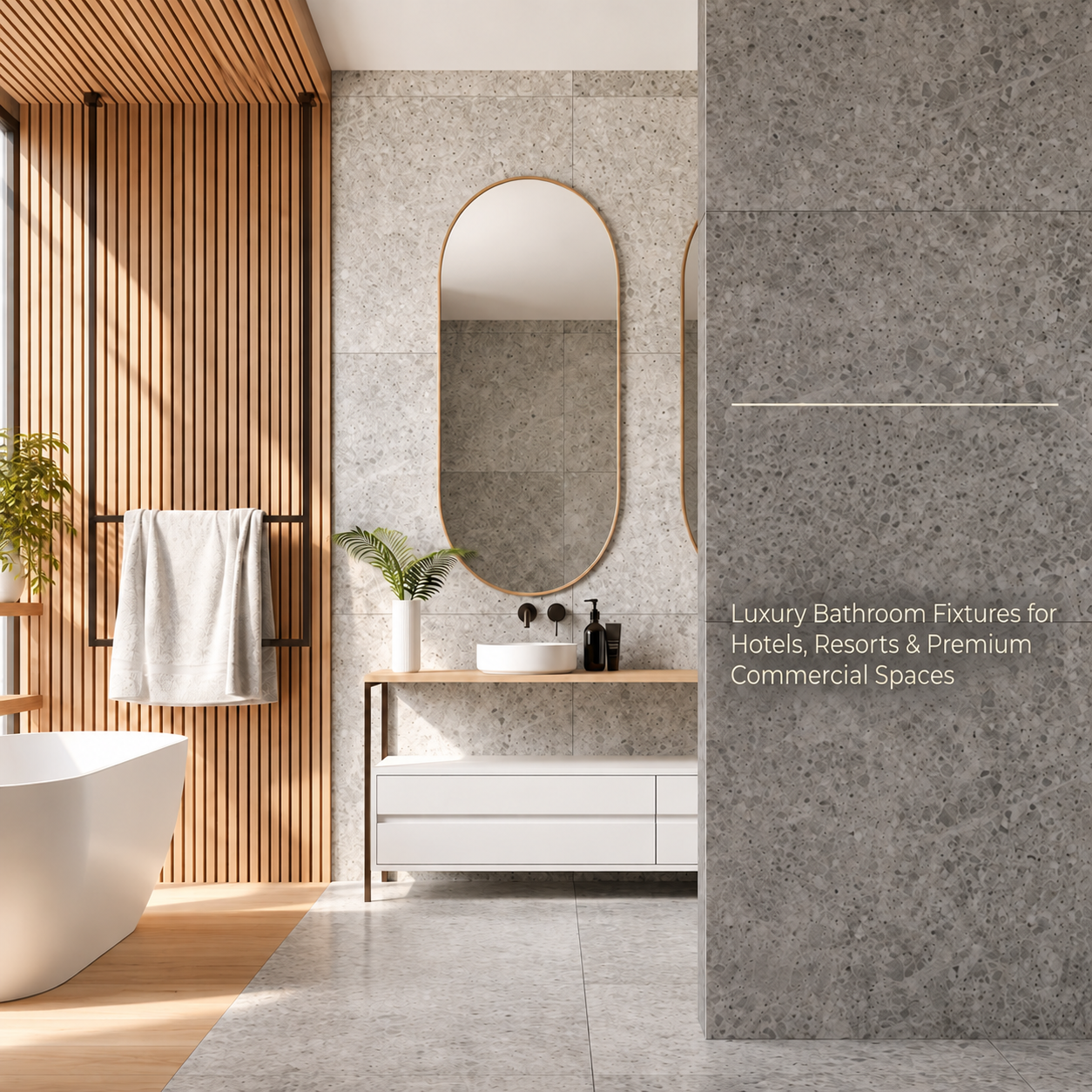
Hotel bathroom mirror with integrated lighting
Integrated lighting can combine grooming illumination with a cleaner architectural elevation.
Luxury hotel bathroom with smart mirror technology
Smart mirror technology works best when local controls remain intuitive for short-stay guests.
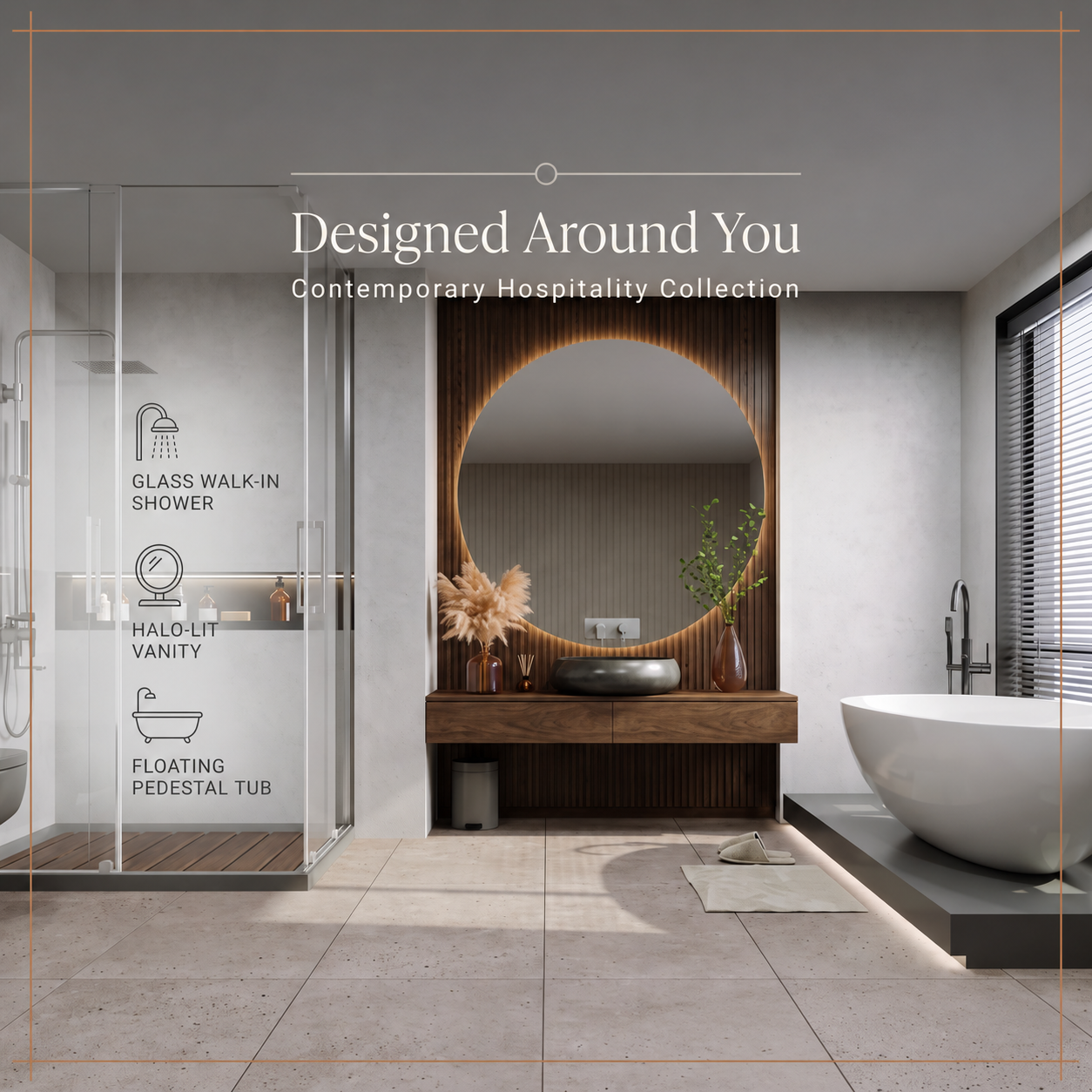
Luxury hospitality bathroom with premium mirror and lighting
Mirror scale, lighting, vanity proportions and finish coordination shape the overall guest experience.
Specification Matrix

Smart Mirror Features and Their Project Implications

Feature Guest Benefit AEC Review Operations Impact
Integrated LED Lighting Improved grooming visibility and ambient light. Review glare, diffusion, electrical load and dimming strategy. LED driver replacement and cleaning access.
Defogging Pad Maintains a clearer mirror after shower use. Coordinate power, heated area and control logic. Avoid unnecessary continuous operation.
Touch Control Simple local interaction. Review control location and usability. Cleaning chemistry and replacement control availability.
Dimming Allows brighter grooming light and softer ambient settings. Coordinate local controls with room-lighting strategy. Keep interface simple enough for short-stay guests.
Bluetooth / Audio Optional entertainment feature. Review privacy, connectivity and actual guest-use value. More electronics can add support complexity.
Display / Smart Functions Can present time, information or connected features. Review software, connectivity and data implications. Plan for technology obsolescence and replacement.
Lighting Performance

Smart Mirror Lighting Should Support the Face, Not Just the Wall

The mirror should be evaluated as a task-lighting element as well as a decorative object. Light that appears attractive in a rendering can still produce facial shadows, glare or poor grooming visibility if the source is concentrated only at the top or aimed directly toward the user’s eyes.

Light Distribution Perimeter or side-oriented illumination can help reduce harsh facial shadows compared with a single overhead source.
Glare Diffusers and shielded light sources help limit direct high-brightness reflections.
Color Quality Good color rendering is important for skin tones, grooming and cosmetic use.
Color Temperature Coordinate mirror lighting with the room’s broader bathroom lighting palette rather than mixing visually conflicting tones.
Dimming Where included, dimming should remain intuitive and not require complex setup by the guest.
Replacement Drivers and control modules should be serviceable without replacing the entire mirror where practical.
Defogging + Moisture

Defogging Should Be Treated as an Electrical Function

Mirror demisters can improve guest convenience after shower use, but they introduce a heating element into a wet bathroom environment. The electrical strategy should therefore be reviewed alongside location, control method, serviceability and the manufacturer’s installation requirements.

Control Logic Determine whether defogging is manual, timed or linked to another bathroom control.
Heated Area The demister does not necessarily need to heat the entire mirror surface.
Energy Use Avoid leaving the heating function active longer than necessary.
Humidity Mirror performance should be considered alongside bathroom ventilation and shower moisture loads.
Service Access Heating and control components should be reachable without destructive finish work.
Manufacturer Instructions Follow the specific product’s electrical and installation requirements.
Electrical Coordination

Power, Drivers & Controls Need Early Wall Coordination

Confirm power requirement for the exact mirror model.
Locate electrical rough-in before backing and wall finish are completed.
Keep drivers and transformers accessible where applicable.
Coordinate mirror mounting hardware with electrical components.
Review wet-location and bathroom electrical requirements.
Confirm whether lighting and defogging operate independently.
Document any dimming or control interfaces.
Avoid requiring a mobile app for basic mirror functions.
Confirm how the mirror is safely isolated for maintenance.
Retain the installation manual in the operations documentation.
Accessibility

Smart Mirror Mounting Must Still Meet Accessible Bathroom Requirements

In accessible toilet and bathing rooms, mirror mounting should be reviewed against applicable accessibility requirements rather than driven only by vanity composition. For mirrors above lavatories or countertops, the ADA Standards address the maximum height of the bottom edge of the reflecting surface.

Mirror Height Coordinate the bottom of the reflecting surface with the applicable accessibility requirement.
Vanity Height The mirror, lavatory and countertop need to work together as one accessible assembly.
Controls Touch controls or switches should be usable within applicable reach conditions.
Full-Length Mirrors A full-length mirror can improve usability across a broader range of users.
Clear Floor Space Mirror placement should coordinate with the usable area around the lavatory.
Project Verification Verify the governing accessibility standard and local jurisdiction for the specific property.
Housekeeping + Operations

Hospitality Smart Mirrors Need a Cleaning and Replacement Strategy

Hospitality mirrors are cleaned frequently, often with chemicals that may also contact edge seals, touch controls, frames and integrated lighting components. The approved cleaning method should therefore be part of the operations documentation rather than left to trial and error after opening.

Frameless designs can simplify the visual elevation but may expose polished edges and electronic control zones to repeated wiping. Framed mirrors add a perimeter material that must coordinate with moisture resistance and finish durability. In both cases, the housekeeping team should understand which cleaners are compatible with the mirror, coatings and electronics.

Replacement planning is particularly important for technology-integrated products. If the LED driver, touch sensor or demister fails, the hotel should know whether the component can be replaced independently or whether the entire mirror must be removed. Standardizing a limited number of mirror sizes and control platforms across room types can simplify spare-parts planning.

Connected Features

Connected Features Should Have a Clear Hospitality Use Case

Bluetooth audio, displays and networked functions may enhance selected premium rooms, but more electronics do not automatically create a better hotel mirror. Every connected feature should have a clear guest benefit, support model and replacement path.

Local First Basic lighting and defogging should remain straightforward without relying on a guest account or mobile phone.
Bluetooth Audio connectivity may be useful in premium rooms, but pairing should be easy to reset between guests.
Displays Information screens introduce software and technology-lifecycle concerns.
Privacy Any connected functions should be reviewed for guest privacy and data handling implications.
Support Confirm whether the manufacturer supports firmware, controller or app updates over the expected asset life.
Fallback Core mirror lighting should remain usable if optional connected functions become unavailable.
Procurement + Submittals

Smart Mirror Submittal Checklist

Exact manufacturer and model.
Mirror dimensions and orientation.
Mounting system and required wall backing.
Electrical requirement.
LED lighting configuration.
Dimming capability and control type.
Defogging area and control logic.
Driver or transformer location.
Accessibility mounting height.
Finish or frame specification.
Cleaning and maintenance instructions.
Replacement component availability.
Connected or Bluetooth functions.
Warranty and service documentation.
Hospitality Context

Smart Bathroom Technology in Luxury Hospitality

Luxury hospitality teams increasingly evaluate bathroom technology through guest experience, maintenance and brand standards rather than as isolated novelty features. The goal is to integrate technology without making the room visually or operationally complicated.

Luxury Hotels Integrated lighting and refined controls can support premium guestroom expectations without adding visible hardware clutter.
Resorts Defogging and strong grooming illumination can be relevant in humid or spa-oriented bathroom environments.
Branded Residences Residents may value additional connected functions more than short-stay hotel guests.
Wellness Suites Mirror lighting can coordinate with broader wellness and ambient-lighting strategies.
Public Restrooms Durable, accessible illuminated mirrors can improve visibility without requiring consumer-style smart functions.
Portfolio Standards Standard sizes, drivers and control families can simplify replacement and maintenance across properties.
Product & Specification Resources

Hospitality Smart Mirror Resources

Government & Professional References

Independent References for Hospitality Mirror Specification

U.S. Access Board — Plumbing Elements & Mirrors Accessibility requirements covering mirrors and related toilet-room elements.
ADA Accessibility Standards Official accessibility standards relevant to mirrors, lavatories and bathroom layouts.
American Institute of Architects Professional architecture resources and design-practice guidance.
American Society of Plumbing Engineers Professional plumbing-engineering resources for hospitality and commercial bathroom coordination.
USGBC LEED Green-building framework used across hospitality and commercial projects.
WELL Building Standard Health and wellbeing framework relevant to lighting and occupant experience.
U.S. EPA WaterSense Water-efficiency guidance for bathroom plumbing products and commercial buildings.
International Code Council Model codes and standards relevant to building and bathroom coordination.
IAPMO Plumbing codes, standards and product-certification resources.
NSF Independent product certification and public-health standards resources.
Smart Mirror FAQ

Questions Hotel Designers & Owners Ask

What is a smart mirror in a hotel bathroom?
A hotel smart mirror generally combines the reflective surface with integrated functions such as LED lighting, defogging, dimming, touch controls or optional connected features.
Which smart mirror features are most useful in hotels?
Integrated task lighting, reliable defogging and simple local controls usually provide the clearest everyday benefit. More complex connected features should have a defined operational or guest-experience purpose.
How should smart mirrors be coordinated in accessible bathrooms?
Mirror height, lavatory position and any touch controls should be coordinated with the applicable accessibility requirements for the project jurisdiction.
Are defogging mirrors worth using in hotel guestrooms?
They can improve guest convenience, particularly in bathrooms with heavy shower use, but the heating element, power, controls and replacement strategy should be considered during specification.
Should hotel smart mirrors include Bluetooth or displays?
Only when those functions support a clear guest-experience strategy. Additional electronics can increase support, privacy and replacement complexity.
What should be included in a smart mirror submittal?
Include dimensions, mounting, electrical requirements, lighting, defogging, controls, finish, accessibility height, service access, cleaning instructions and replacement-part information.
Should smart mirrors be standardized across hotel guestrooms?
Standardization can simplify procurement, wall rough-in, replacement parts and maintenance, especially across large properties or portfolios.
Hospitality Specification Principle

Specify the Mirror as Lighting, Electrical & Guest Technology

Luxury hotel smart mirrors perform best when lighting quality, defogging, electrical rough-in, mounting, accessibility, cleaning and serviceability are coordinated as one assembly. Additional connected features should be added only where they improve the guest experience without creating unnecessary lifecycle complexity.

Arden Lowe

Arden Lowe is a staff writer and editorial team member at hospitalitybath.com. Arden's editorial work focuses on bathroom usability, fixture selection, design consistency, and hotel operations, with articles based on product documentation, recognized standards, manufacturer materials, and attributable sources to support informed planning and purchasing decisions.