Hospitality Bathroom Design & Specification Guide for Hotels and Luxury Resorts
A successful hospitality bathroom has to perform long after opening day. Architects, interior designers, developers, plumbing engineers, procurement teams and facility managers should evaluate guest bathrooms through the combined lenses of guest experience, water use, plumbing performance, accessibility, housekeeping efficiency, maintenance access and lifecycle cost. This guide connects those considerations across faucets, showers, bathtubs, vanities, public restrooms and hotel specification programs.
Hospitality Bathroom Specification Principle
Do not specify a hotel bathroom as a collection of attractive products. Evaluate it as one coordinated operating system. Water delivery, thermal control, basin geometry, drainage, fixture clearances, accessibility, finish durability, housekeeping access, valve serviceability and replacement strategy can all influence whether the room continues to perform after thousands of guest stays.
Core Fixture Decisions That Shape Hospitality Bathroom Performance
Hotel bathroom fixtures are used, cleaned and serviced differently from fixtures in most private homes. A useful specification therefore connects each decorative decision with an operational consequence.
Select Faucets Beyond Appearance
Coordinate flow, aeration, splash behavior, cartridge access, finish durability and basin geometry. In public hospitality restrooms, sensor reliability, power strategy and service access can become equally important.
Review: flow · basin fit · valve · finish · serviceTreat the Shower as a System
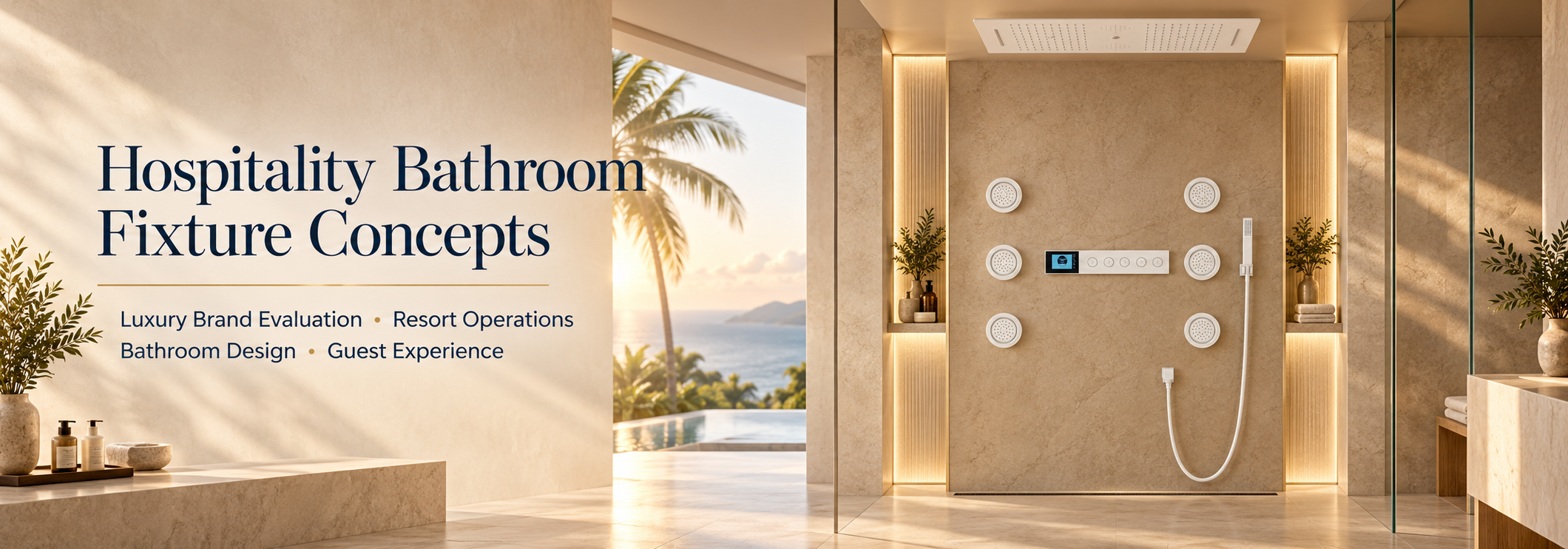
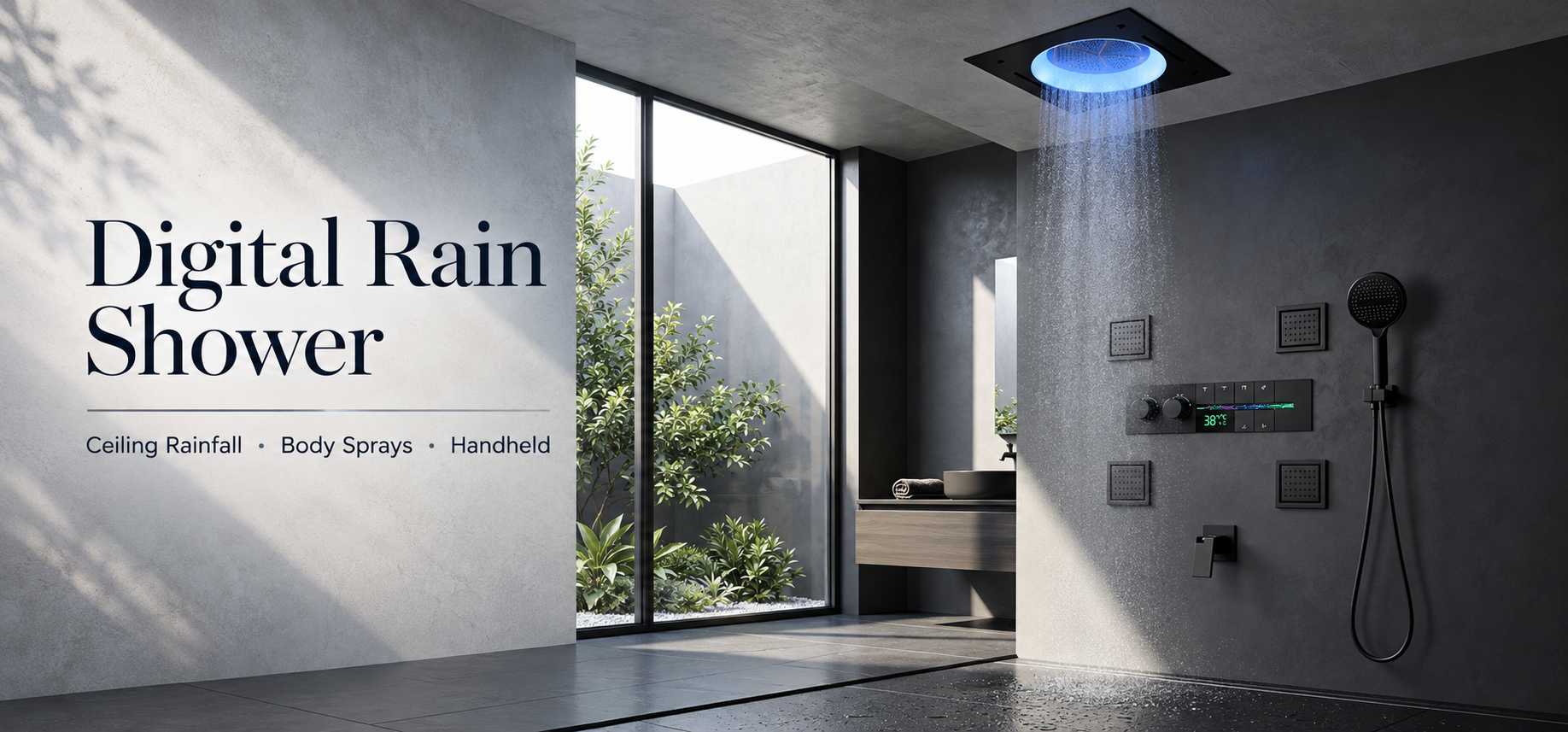
Rain heads, handhelds and body sprays interact with supply pressure, valve architecture, hot-water capacity and drainage. Multi-outlet systems should be engineered as complete assemblies rather than selected trim by trim.
Review: pressure · flow · mixing · drainageMatch the Bath to the Room Category
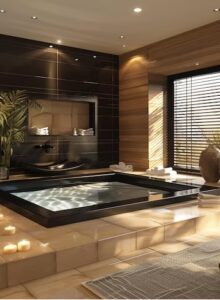
Freestanding baths can add perceived value in suites, but weight, water volume, entry height, filler reach, housekeeping clearance and floor loading need to be resolved before the tub becomes a design commitment.
Review: dimensions · material · load · filler · accessDesign Around Cleaning and Splash
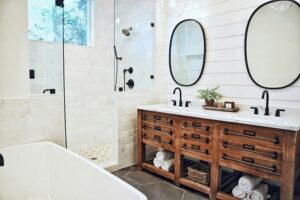
Basin geometry, counter material, seams, splash zones, plumbing access and storage can affect both guest usability and room-turn labor. Attractive millwork should not conceal service components that need recurring access.
Review: basin · surface · seams · storage · maintenanceCoordinate Accessible Rooms Early
Accessible guestrooms require coordinated bathing, lavatory, circulation, control and reach conditions. Accessibility should not be treated as a standard guestroom with grab bars added late in the project.
Review: clearances · controls · seats · routesCompare Operating Cost, Not Purchase Price
Fixture cost should be considered alongside water use, housekeeping effort, spare parts, finish replacement, maintenance access and the disruption associated with servicing concealed components after the hotel opens.
Review: CAPEX · water · labor · parts · serviceabilityHospitality Bathroom Design Context
Spaces for guestrooms, luxury suites, commercial washrooms, shower details, bathtub installations with technical coordination.
Hospitality Bathroom Brands Compared by Project Role
No single manufacturer is strongest in every hotel bathroom category. Brand selection should follow the application: guestroom showers, signature suites, public restrooms, concealed systems, touchless fixtures or coordinated bathroom programs.
| Brand | Strongest Hospitality Role | Showers | Faucets | Bathtubs | Touchless / Commercial | Typical Project Fit |
|---|---|---|---|---|---|---|
| Kohler | Broad coordinated bathroom programs | Strong | Strong | Outstanding | Strong | Luxury and full-service hotels |
| GROHE | Showers, thermostatic control and fittings | Outstanding | Outstanding | Moderate | Strong | 4–5 star hotels |
| Hansgrohe / AXOR | Design-led showering and mixers | Outstanding | Outstanding | Moderate | Moderate | Luxury / lifestyle properties |
| American Standard | Broad fixture programs and commercial applications | Strong | Strong | Strong | Excellent | Large hotel chains |
| Roca | International coordinated bathroom programs | Strong | Strong | Strong | Excellent | International hospitality |
| Sloan | High-traffic commercial restrooms | Limited | Outstanding | — | Outstanding | Lobbies, ballrooms, convention spaces |
| BathSelect™ | Feature showers and hospitality touchless programs | Excellent | Excellent | Strong | Outstanding | Resorts, suites and executive spaces |
| FontanaShowers™ | Architectural showers and touchless fixtures | Excellent | Excellent | Moderate | Outstanding | Luxury guestrooms and public areas |
Bathtub Brands to Review for Luxury Hotel Suites
Bathtubs require a more selective specification strategy than faucets or standard shower trim because material weight, water volume, room circulation and housekeeping access can vary substantially from one product to another.
Kohler
Kohler offers freestanding, drop-in and experience-oriented baths across premium collections. Its bathtub range is particularly useful when hospitality designers need coordinated bathing and faucet programs from one manufacturer.
Explore Kohler →Kallista
Kallista’s sculptural baths fit signature-suite and design-led hotel applications where the bathtub is expected to function as an architectural centerpiece rather than a room-standard fixture.
Explore Kallista →DXV
DXV provides contemporary freestanding baths suited to premium urban hotels, branded residences and design-focused hospitality projects.
Explore DXV →Duravit
Duravit offers freestanding, built-in and back-to-wall bathing configurations, giving architects multiple planning options for guestrooms, suites and wellness-oriented bathrooms.
Explore Duravit →TOTO
TOTO’s bathing portfolio includes sculptural freestanding products that can support hotel wellness concepts where deep relaxation and guest experience are part of the room proposition.
Explore TOTO →MTI Baths
MTI offers freestanding, acrylic, solid-surface and therapy-oriented configurations that can be useful for resort, spa and wellness-suite programs.
Explore MTI Baths →Jacuzzi®
Jacuzzi’s freestanding and hydrotherapy heritage can be relevant to hospitality projects where the bathtub is part of a broader wellness or premium-suite strategy.
Explore Jacuzzi →BathSelect™
HospitalityBath’s BathSelect research identifies freestanding soaking and hydromassage configurations intended for premium hospitality room categories where enhanced bathing experience justifies additional engineering and service coordination.
Review BathSelect for Hotels →Why Hotel Bathroom Specification Requires Lifecycle Thinking
Hospitality bathrooms are repeated environments. A decision that appears minor in one room can become a recurring operational issue when multiplied across hundreds of guestrooms. A faucet finish that shows water spots, a shower valve that requires destructive access, a vanity seam that slows housekeeping, or a freestanding bathtub with inaccessible floor space around its perimeter can create labor and maintenance costs throughout the life of the hotel.
Water use should also be considered at property scale. Flow rate matters, but fixture efficiency alone does not create an efficient hotel. Leaks, commissioning, shower duration, sensor timing, hot-water generation and maintenance practices all influence actual consumption. EPA WaterSense specifically identifies hotels as commercial facilities that can benefit from planning, metering, leak detection and water-management practices. That broader approach is more useful than simply labeling individual fixtures “eco-friendly.”
Showers deserve particular coordination because guest comfort and mechanical performance meet at the valve. Large rain heads and multi-outlet systems can increase simultaneous demand, while poorly coordinated pressure or temperature control can undermine the luxury experience even when the trim itself is visually impressive. The valve, outlet count, available pressure, hot-water system and drainage should therefore be reviewed as one assembly.
Housekeeping should be treated as part of design performance. Hotel room attendants clean the same fixture geometries repeatedly. Additional grout, exposed joints, narrow gaps, polished surfaces and difficult-to-reach plumbing can increase recurring labor. Our guide to bathroom fixtures that can reduce room-turn time examines these operational issues in greater detail, while our research on durable hotel bathroom finishes focuses on cleaning exposure, surface performance and long-term appearance.
Hospitality bathroom design also changes by zone. Guestrooms prioritize comfort, quiet operation, finish consistency and housekeeping. Luxury suites may justify larger baths, feature showers and more complex controls. Public restrooms must handle concentrated traffic peaks, repeated sensor cycles, soap logistics and rapid servicing. For those spaces, see the HospitalityBath guide to commercial bathroom fixtures for high-traffic hotels .
Fixture Priorities by Hotel Bathroom Zone
A consistent brand standard does not mean every hospitality bathroom should use identical fixture architecture. Each zone has a different operational profile.
| Hotel Zone | Primary Design Priority | Technical Risk | Recommended Specification Focus |
|---|---|---|---|
| Standard Guestroom | Comfort + durability | Repeat maintenance across many rooms | Simple valves, durable finishes, easy housekeeping |
| Luxury Suite | Experience + visual impact | Complex shower/bath systems | Thermal control, flow, drainage, service access |
| Accessible Guestroom | Usability + compliance | Poor late-stage spatial coordination | Clearances, controls, seats, reach and circulation |
| Lobby Restroom | Luxury + traffic durability | Sensor/service failures | Touchless performance, basin fit, power and access |
| Ballroom / Convention | Peak throughput | Short-duration extreme use | Commercial valves, soap capacity, water control |
| Spa / Wellness | Experience + hygiene | Water, steam and cleaning exposure | Material durability, drainage, thermal control |
Hospitality Bathroom Specification Checklist
Document enough information for design, engineering, procurement, installation, commissioning and future maintenance teams to understand the intended performance of each fixture.
- Flow and water use: record actual design flow rates and flush volumes rather than broad efficiency claims.
- Pressure requirements: confirm fixture and shower performance against available operating pressure.
- Temperature control: identify pressure-balancing, thermostatic or other mixing architecture before rough-in.
- Drainage: coordinate multi-outlet showers and large baths with appropriate drainage capacity.
- Basin coordination: verify faucet projection, outlet height and expected water impact.
- Maintenance access: maintain access to cartridges, valves, electronics, filters and connections after finishes are installed.
- Finish strategy: consider cleaning chemistry, fingerprints, water spotting and future replacement consistency.
- Housekeeping: review seams, grout, narrow gaps and difficult-to-clean surfaces.
- Accessibility: coordinate complete accessible bathing and lavatory conditions at room level.
- Standardization: reduce unnecessary model variation where this improves spare-parts management and staff training.
- Mock-up: test repeated guestroom assemblies before large-scale procurement.
- Documentation: retain current cut sheets, installation instructions, maintenance information and applicable certifications.
Government & Professional Hospitality Bathroom Resources
High-authority research should distinguish official accessibility requirements, water-management guidance, model codes and professional engineering resources from product marketing.
Continue With HospitalityBath Technical Research
Hospitality Bathtubs
Compare luxury hotel bathtub formats by guest experience, material, housekeeping access, structural implications and specification needs.
Read the hospitality bathtub guide →Bathroom Fixture Brands for Hotels
Compare major hotel bathroom manufacturers across water efficiency, showers, faucets, touchless systems and hospitality applications.
Compare hotel fixture brands →Commercial Bathroom Fixtures for High-Traffic Hotels
Review touchless faucets, soap systems, flush technology, serviceability and peak-use restroom planning.
Read the commercial restroom guide →Bathroom Fixtures That Cut Room-Turn Time
Explore the relationship between fixture geometry, water spotting, seams, cleaning effort and recurring housekeeping labor.
Read the housekeeping lifecycle guide →Designing Bathroom Finishes for High-Traffic Hotels
Review durability, cleanability, material selection and finish strategy for heavily used hospitality environments.
Read the hotel finish guide →Top Hospitality Bathroom Fixture Brands
Explore broader brand positioning for guestrooms, showers, faucets and public hospitality bathroom applications.
Explore hospitality fixture brands →Hospitality Bathroom Design & Specification FAQ
These questions address recurring concerns from architects, interior designers, plumbing engineers, developers, procurement teams and hotel facility managers.
What should be specified first in a hotel bathroom?
Are low-flow fixtures always better for hotels?
Should luxury hotels use thermostatic shower valves?
Are freestanding bathtubs suitable for hotel suites?
What makes a hotel vanity easier to maintain?
Are touchless faucets appropriate in hotel guestrooms?
What should be checked in a hotel bathroom mock-up?
How should accessible hotel bathrooms be planned?
Which bathroom brands are strongest for high-traffic hotel restrooms?
Should a hotel standardize bathroom fixtures across multiple properties?
How important is service access behind decorative finishes?
What is the biggest mistake in hospitality bathroom specification?
A Strong Hotel Bathroom Is Designed for Guests and Operators
Hospitality bathroom design succeeds when guest comfort, architecture and operations reinforce one another. A memorable rain shower is only successful if the building can supply it consistently. A sculptural bathtub only works if its load, filler, drainage and cleaning clearance are resolved. A premium vanity finish needs to survive repeated cleaning. A touchless faucet should be coordinated with the basin, power supply and service strategy.
For multi-room and multi-property developments, these decisions become even more important because a small weakness can be repeated hundreds of times. Strong specifications therefore document measurable performance, test critical assemblies in mock-ups, retain current technical literature, and plan maintenance access before decorative finishes make components difficult to reach.
Editorial & Technical Note
HospitalityBath content is intended for architectural research, comparison and early specification planning. Codes, standards, dimensions, product availability and model capabilities can change. Project teams should verify current manufacturer documentation, applicable code editions, local requirements and project-specific engineering before procurement or construction.